About Us
In 2015, Slowstitch Studio began its journey, driven by a desire to create textiles that honor the human touch. The foundation of the Studio is the interplay between opposites: the geometric and the organic, the traditional craft and the contemporary form, the temporary process and the permanent result.

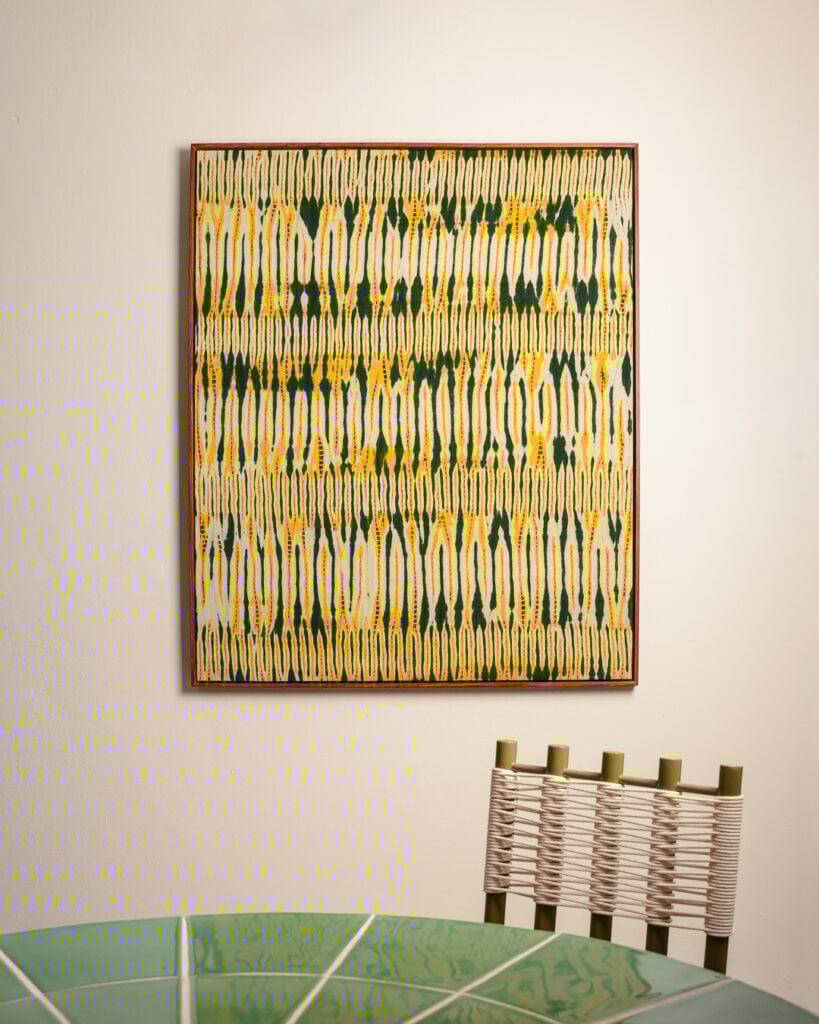
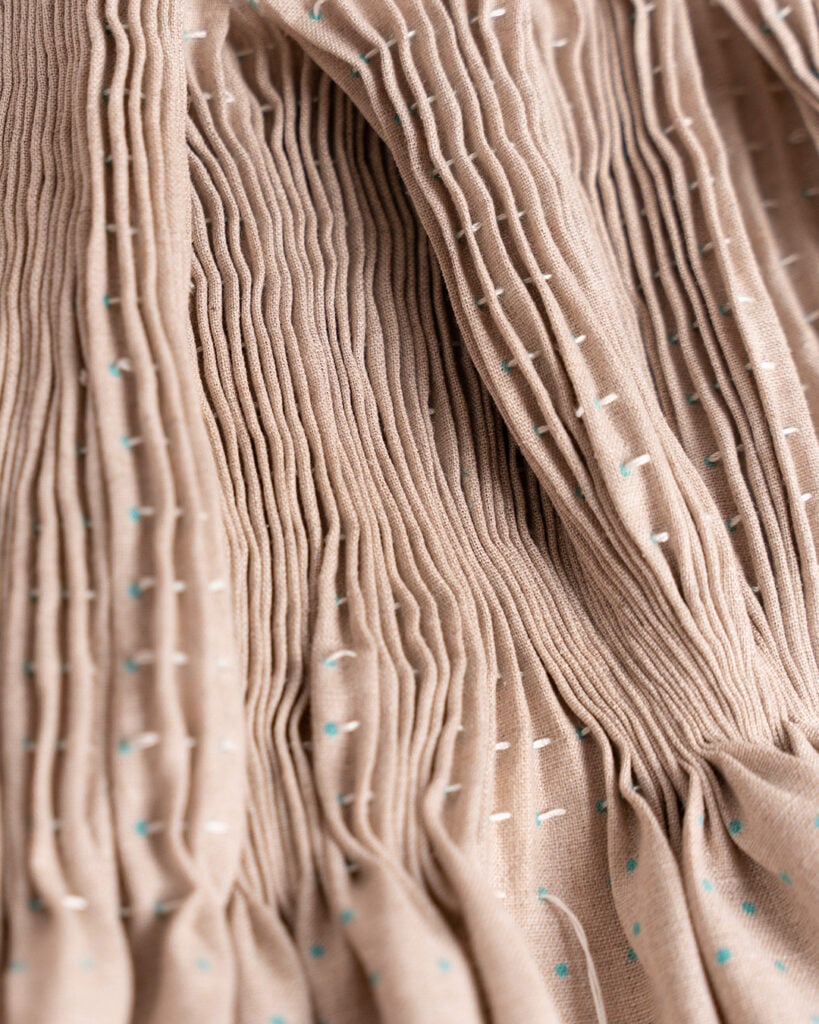
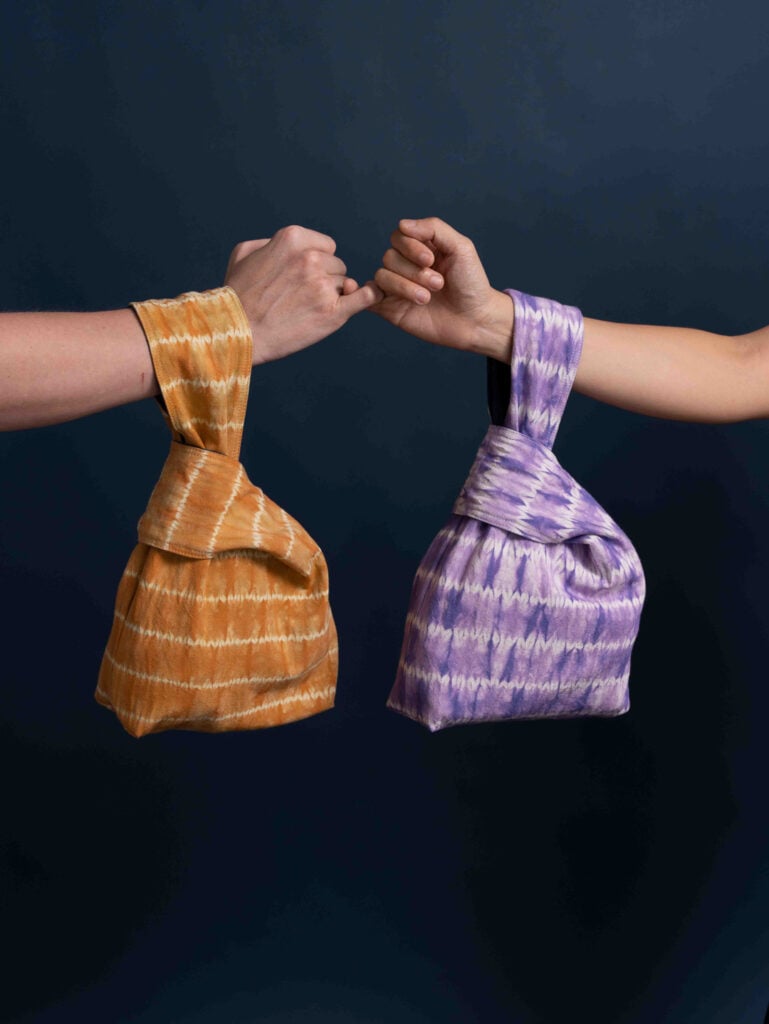
The Studio’s work centers on shibori, a way of patterning cloth through stitching and dyeing. The process is inherently transitory: binding, stitching, and folding the fabric into a precise, three-dimensional structure that exists only for the moment of the dye bath. As the colors settle and bleed into these temporary creases, they leave their distinctive mark. When the structure is released, the final flat pattern emerges—a quiet map of the beautiful discipline of time itself.
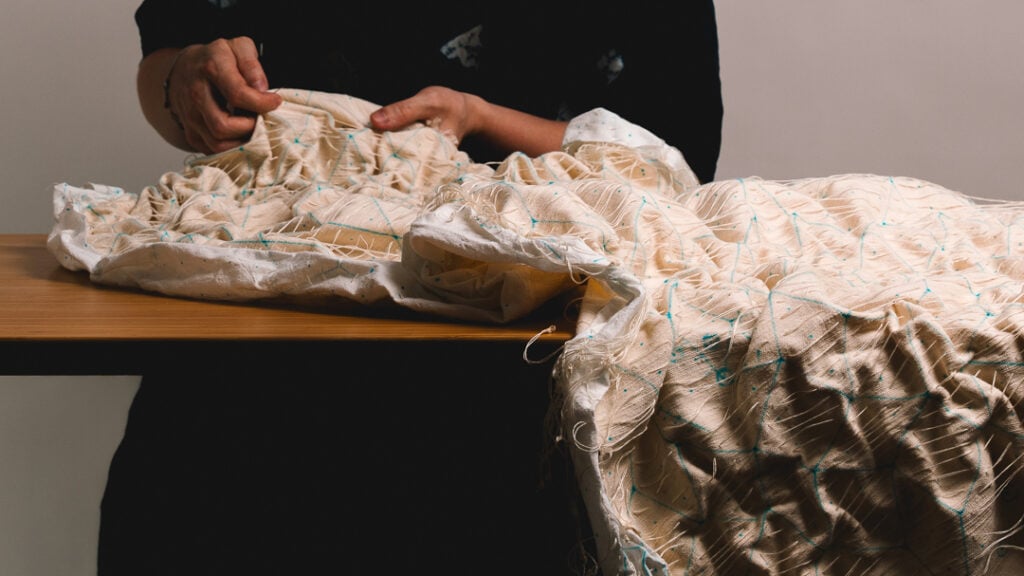
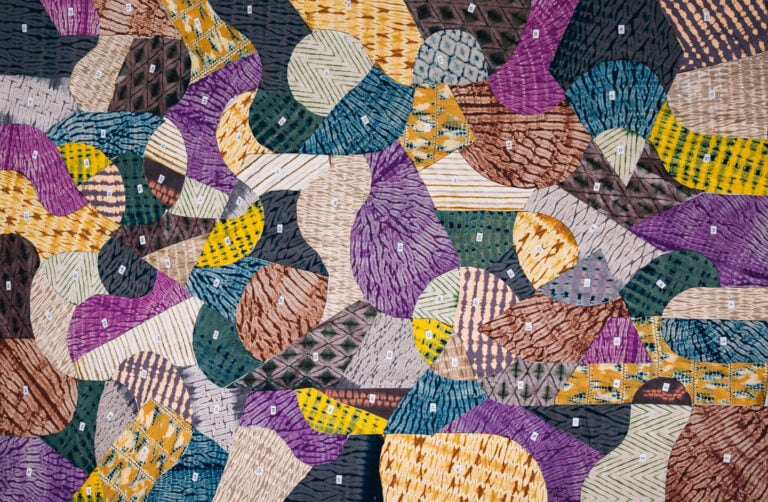
Pattern is a visual language. Its abstraction draws the viewer in through something deeper than description. In the patterns Slowstitch Studio creates, it reveals how its founders and artisans see beauty, how they seek balance, and how they make sense of the world. The irregular rhythm of hand-stitched lines, the unpredictable bloom of dye, the imperfect symmetries that emerge – all express the human need to find order within chaos.
This craft is a response to the fast-paced world – work that values care, attentiveness, and the quiet strength found in imperfection. Each piece is one-of-a-kind, shaped by the hands that made it and the process that brought it into being.

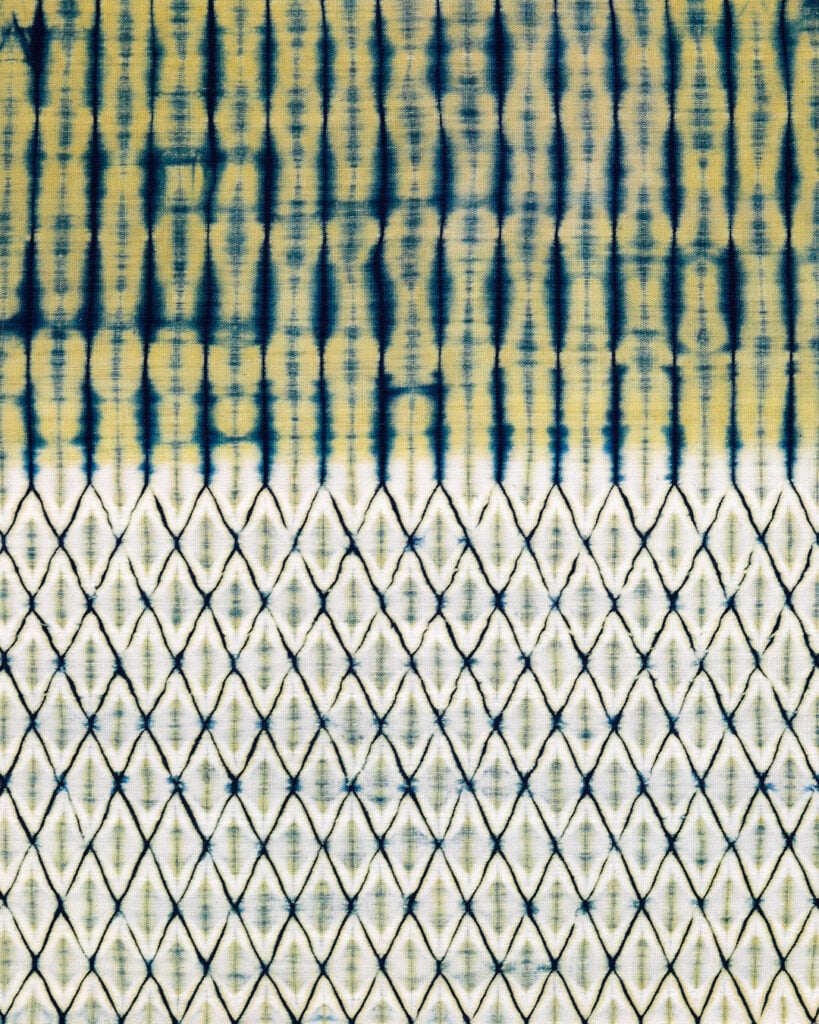
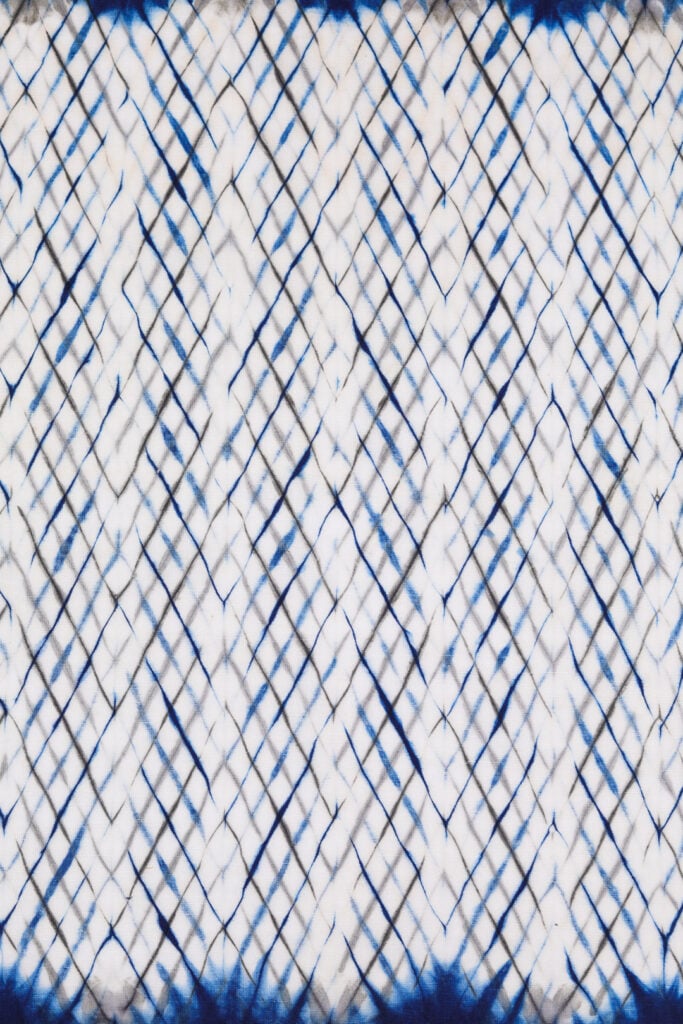
The Studio’s work is rooted in shibori, a traditional Japanese resist-dyeing technique that creates patterns on cloth through methods of folding, stitching, binding, twisting, or compressing the fabric before dyeing. The term comes from the Japanese word shiboru, meaning “to wring” or “to squeeze.” Shibori embraces imperfection and chance – no two pieces are ever the same—and its process reflects a meditation on time, rhythm, and the beauty of transformation.
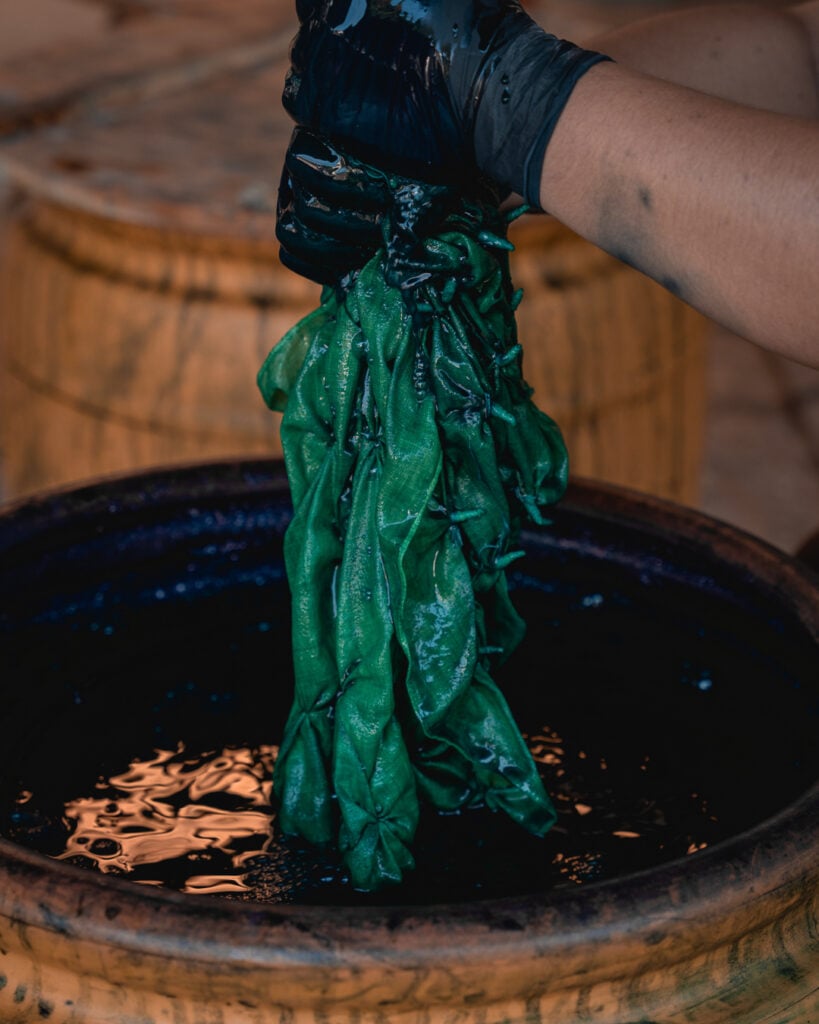

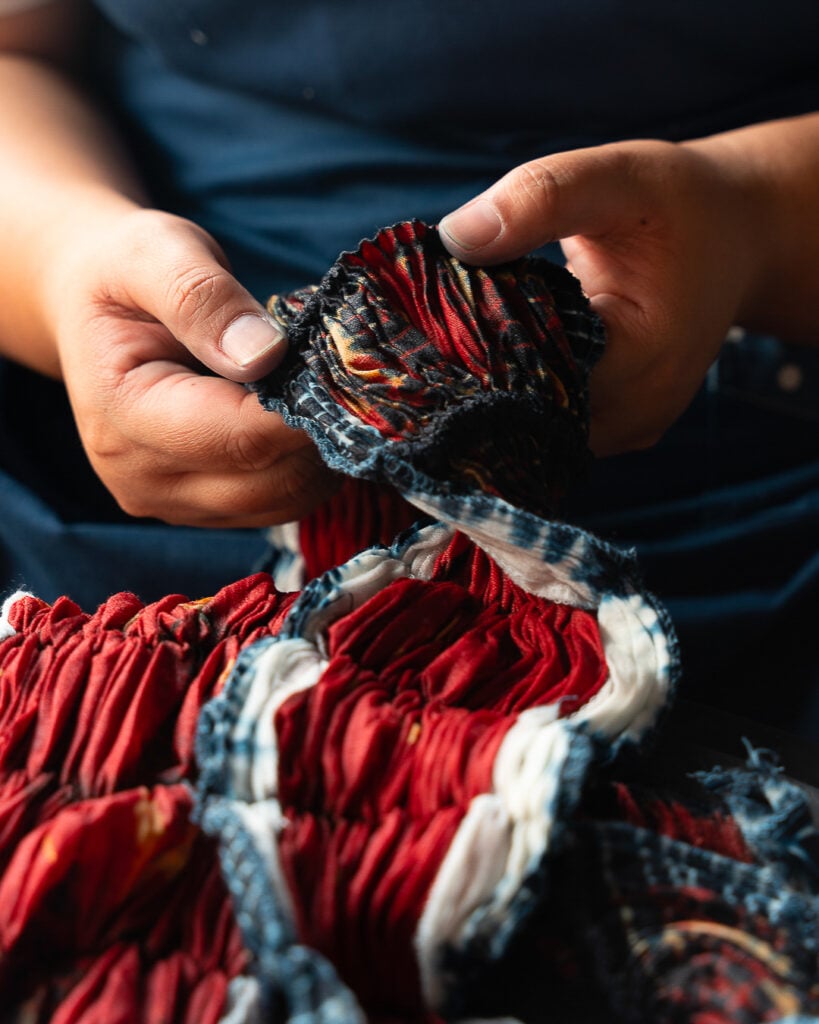
Within shibori, there are many distinct methods, including Itajime shibori (clamping between boards), Arashi shibori (wrapping fabric around a pole for diagonal lines), Kumo shibori (binding the cloth into fine pleated cones), and Nui shibori (sewing running stitches into the fabric). Similar resist-dyeing traditions can be found across cultures, such as bandhani in India, adire in West Africa, and plangi in Indonesia.
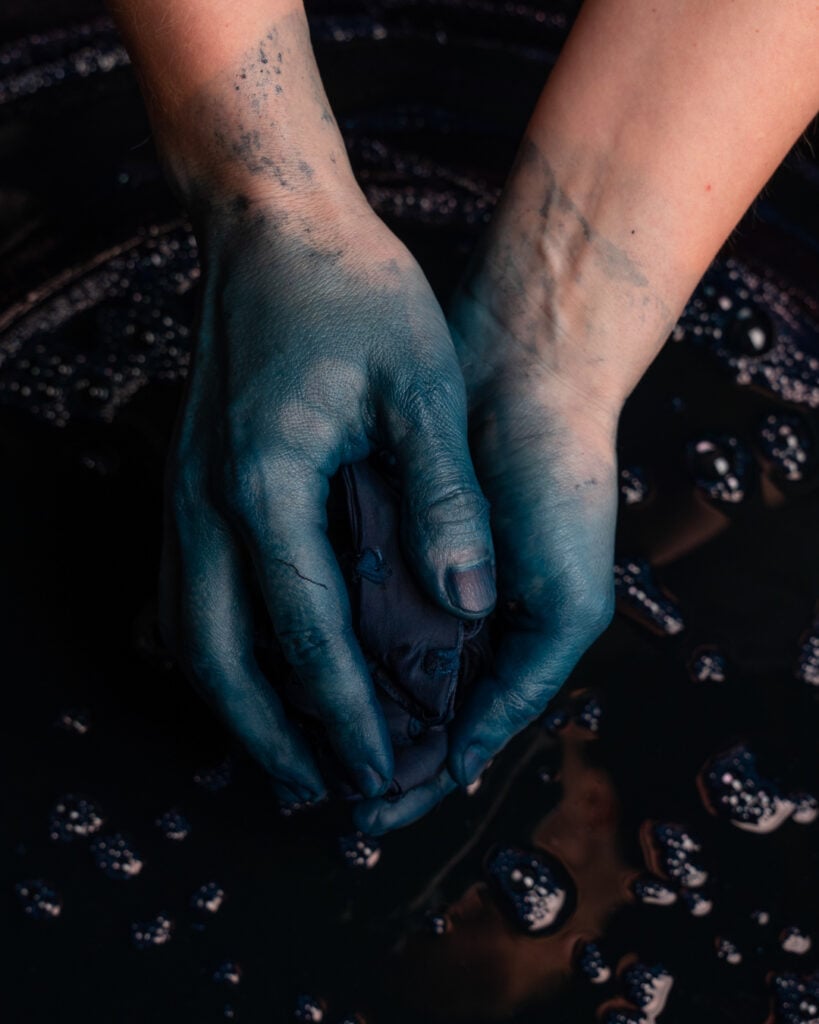
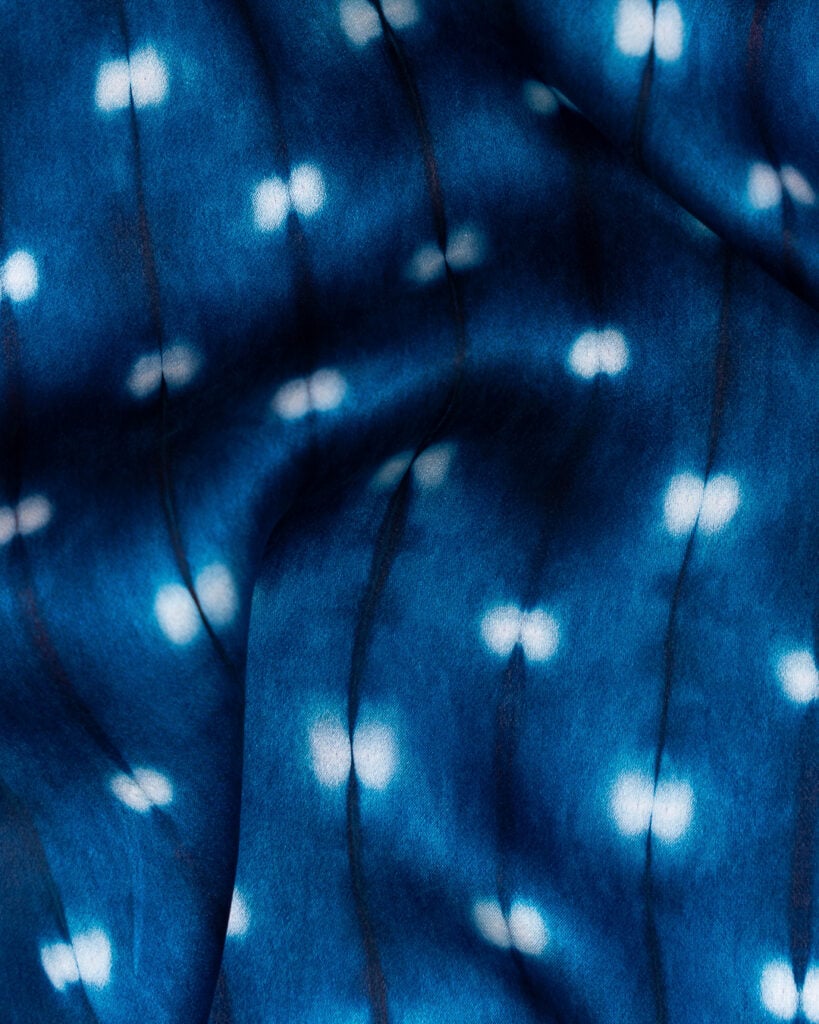
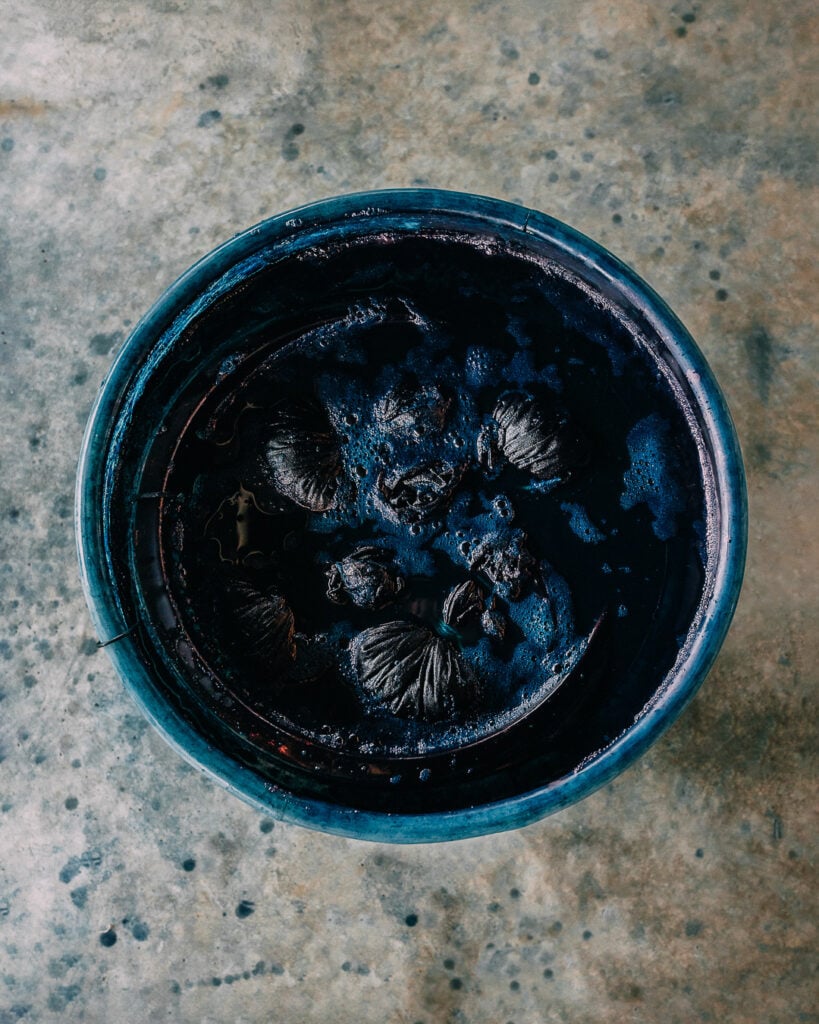
Indigo dyeing is one of the world’s oldest and most distinctive ways of coloring cloth. It relies on a living dye vat where the pigment, derived from the Indigofera tinctoria plant, is made soluble. When fabric is dipped into the vat, it emerges green and turns blue as it oxidizes in air. The process of dipping and airing is repeated many times to build the rich, layered blues that indigo is known for. Because indigo bonds physically with the fibers, it gives the cloth a distinctive depth and texture that softens beautifully over time. Maintaining an indigo vat requires skill and sensitivity, as the balance of ingredients, pH, and temperature determines the color quality.
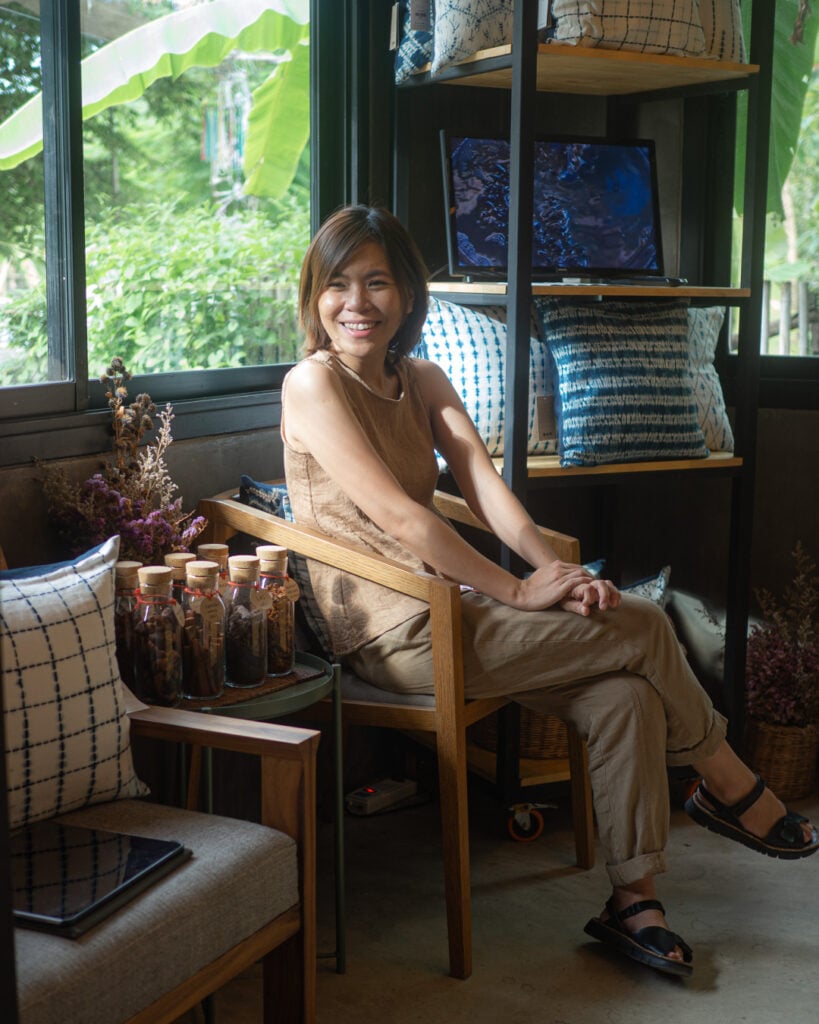
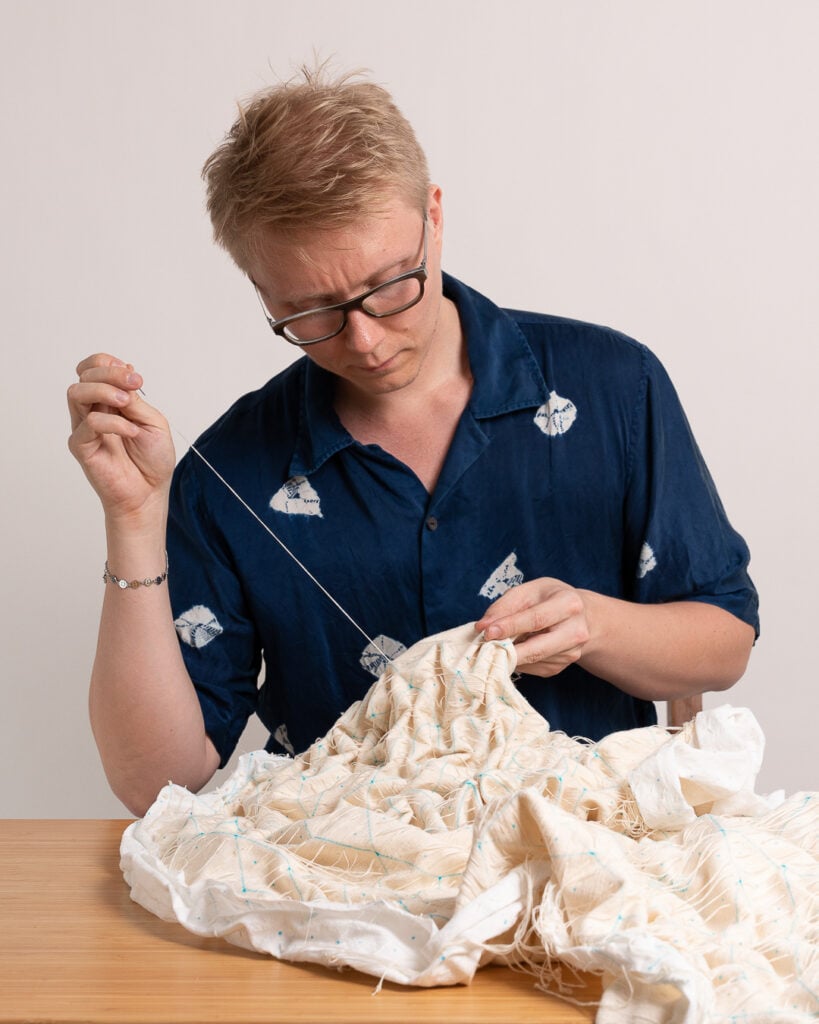
Slowstitch Studio was founded by textile artists Kanchalee (Ann) Ngamdamronk (from Bangkok) and Sergey Tishkin (from Siberia). The two met while serving an apprenticeship under the same master craftsman in rural Japan. There, against the rhythms of mountain life, they discovered a shared appreciation for the simplicity and meditative nature of traditional textile work. Using only thread, needle, fabric, and a dye vat, they found a way to create intricate and unpredictable patterns. This profound connection to the technique launched their collaborative journey, culminating in the establishment of Slowstitch Studio in Chiang Mai.
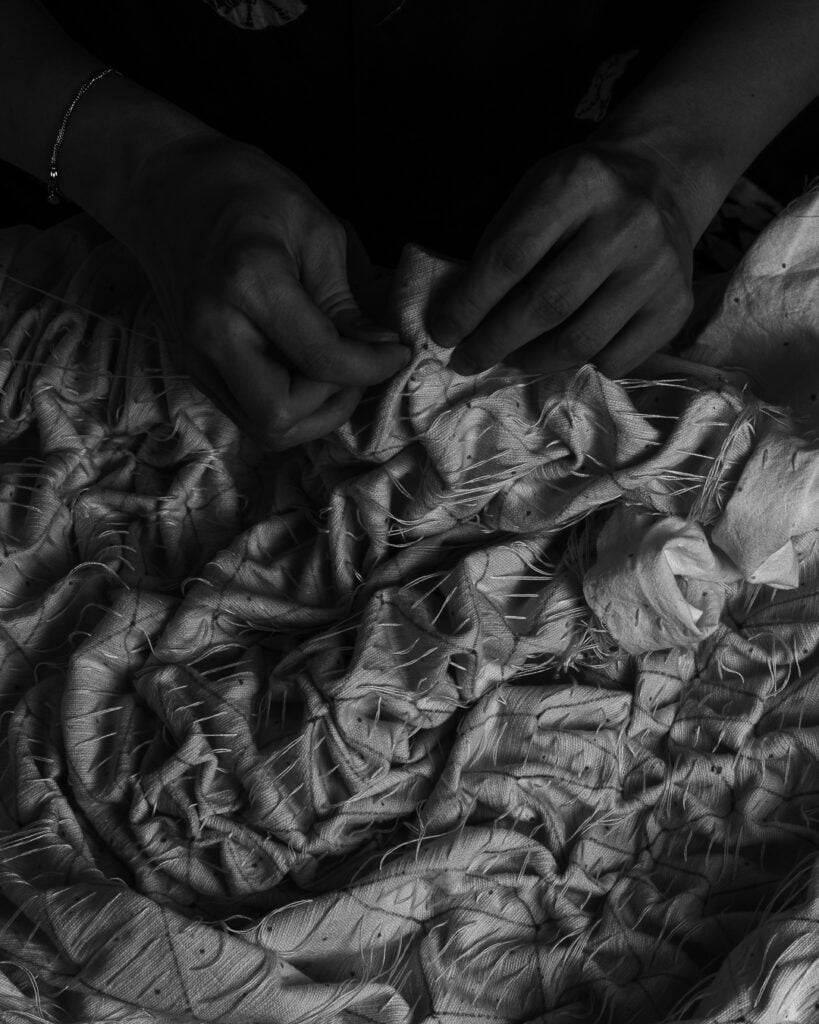
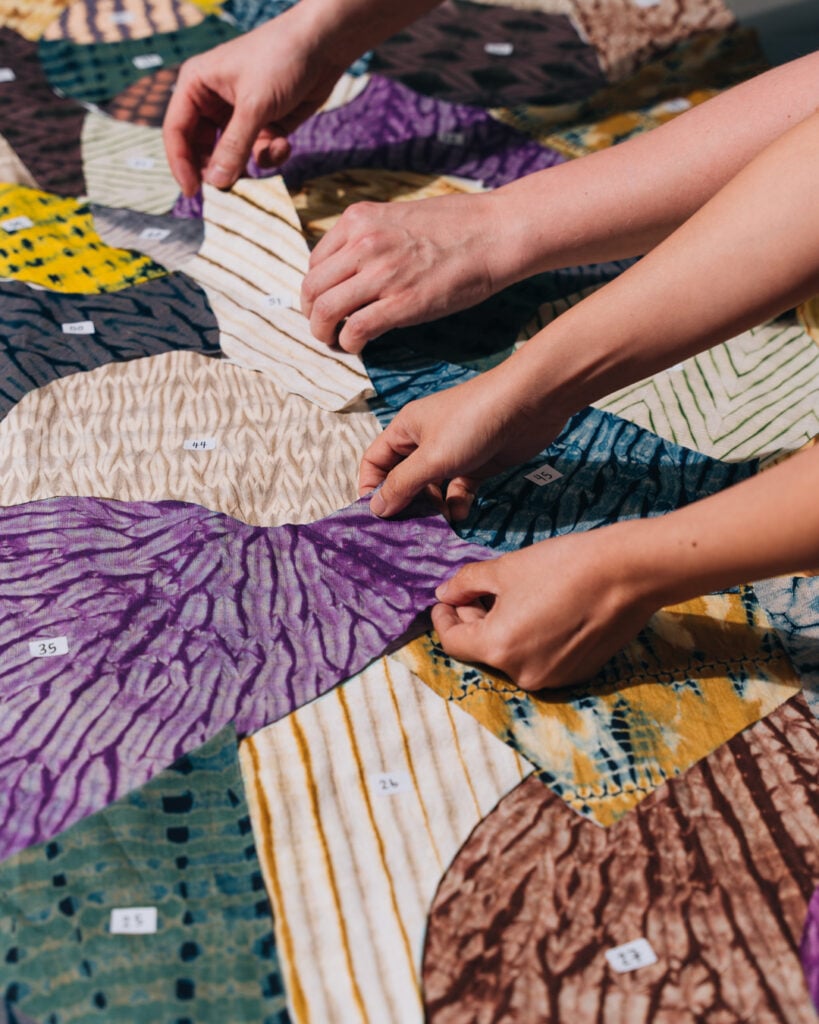
Today, their philosophy of meditative creation is extended through a dedicated team of in-house artisans and informs the studio’s long-term perspective on craft. This deep-rooted commitment to care, attentiveness, and dignity in the process extends beyond the textile itself to the hands that create it. The act of creating beautiful objects by hand can only have a thriving future if a sustainable and equitable environment is guaranteed for every member of the team. This commitment translates into rejecting the high-pressure, high-volume models typical of fast fashion.
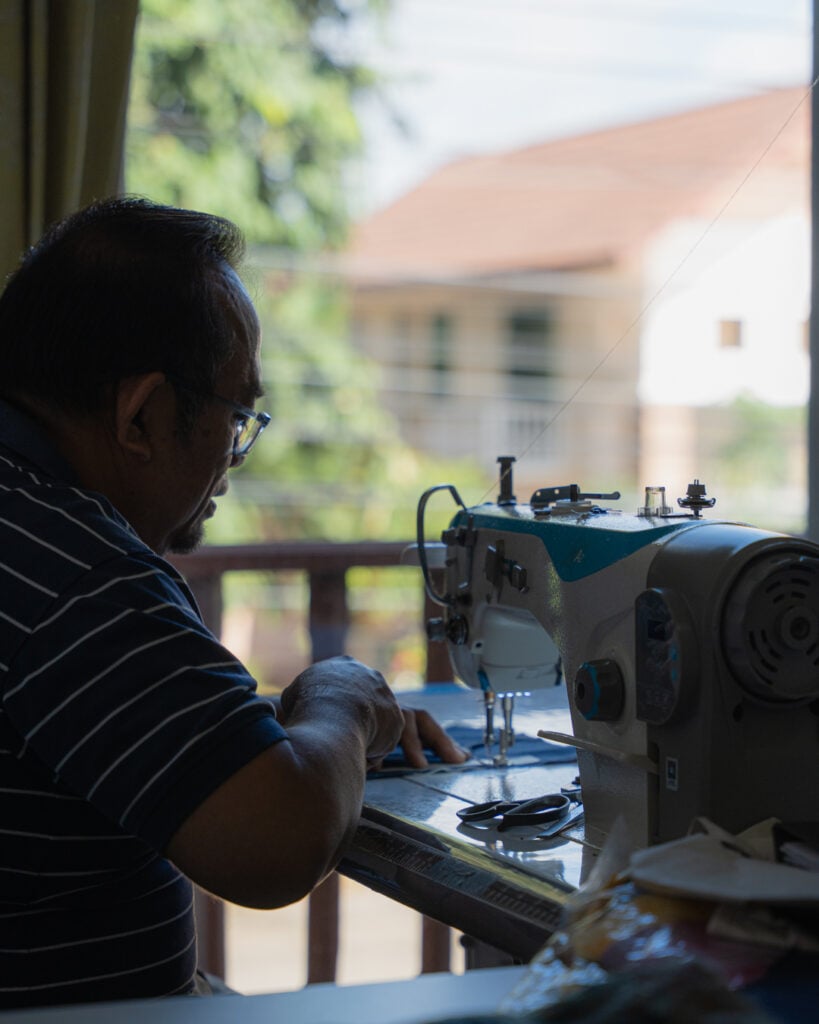
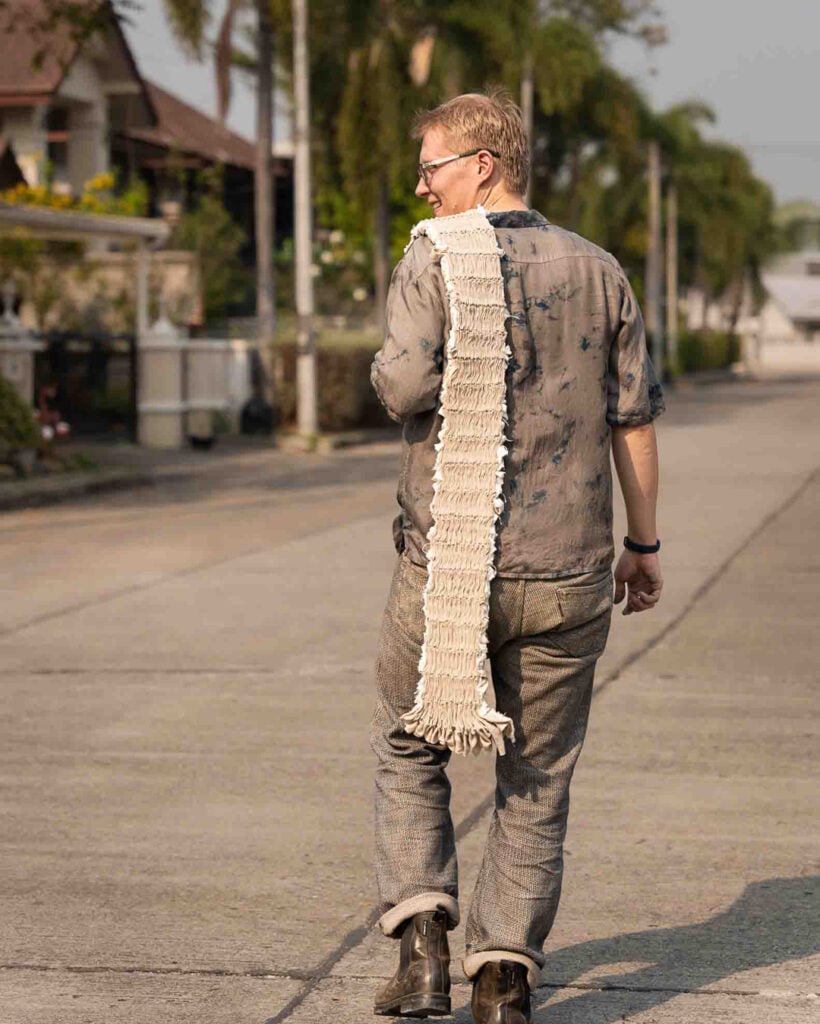
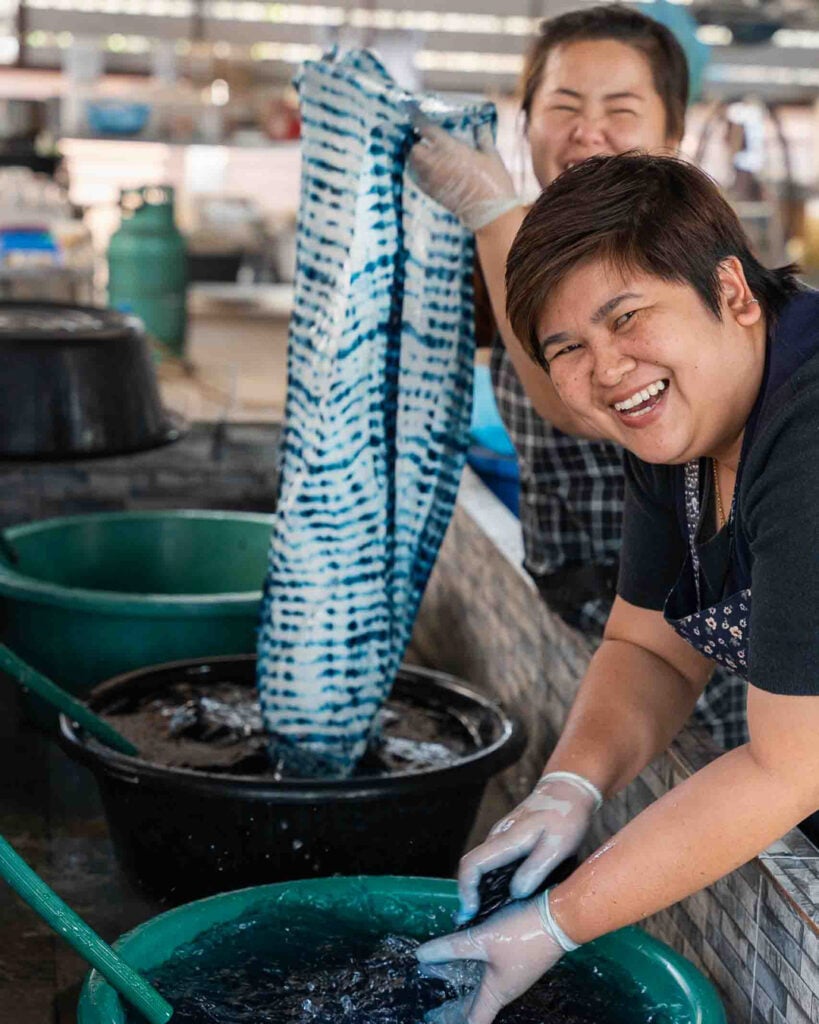
Instead, Slowstitch Studio ensures a safe and supportive working environment and pays members on a salary basis, rather than the piece-by-piece compensation common in the industry. By prioritizing the well-being and expertise of its artisans, the studio not only preserves these irreplaceable skills through continuous mentorship but also ensures that every Slowstitch piece carries a story of dignity and long-term craft preservation.
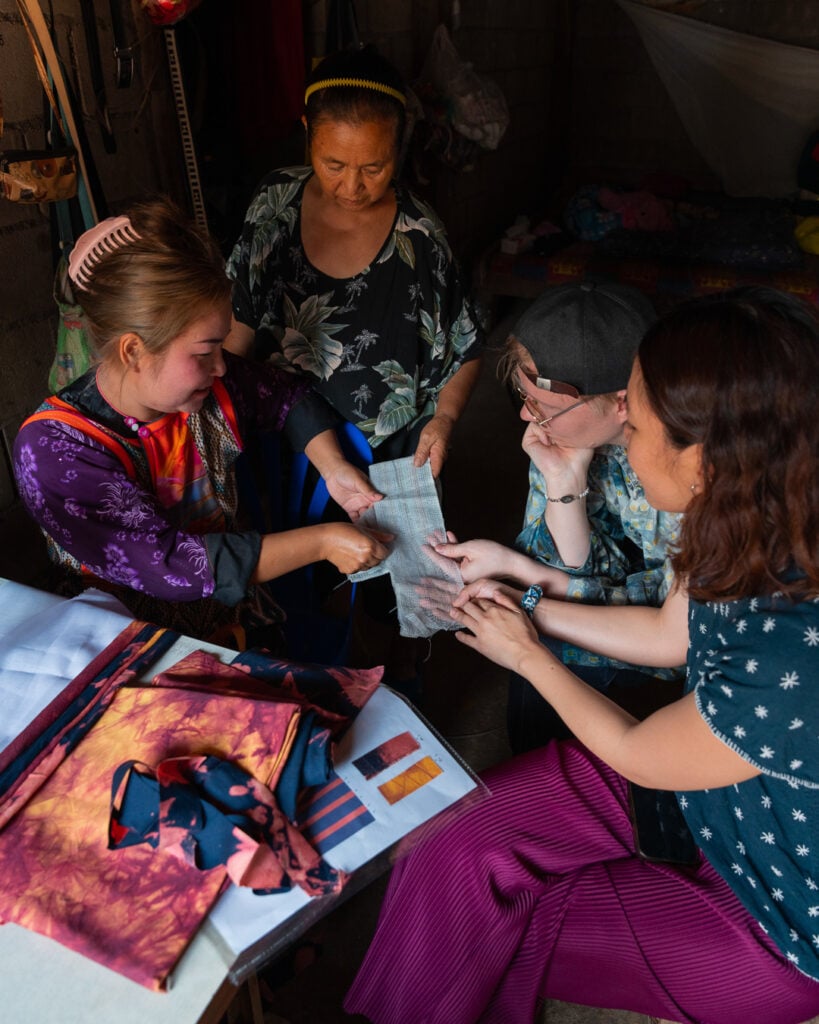

Collaboration plays a key role in Slowstitch Studio’s creative process. The Studio works with local artisans, craft communities, and fellow design studios to co-create pieces that honor traditional techniques while exploring new narratives. These partnerships allow the Studio to blend diverse perspectives, share knowledge, and bring forward unique, meaningful work rooted in mutual respect and creative exchange.