BY SLOWSTITCH TEAM
Collaboration Stories
Colours of Korat
A collection made through the meeting of Slowstitch Studio’s colour practice and Ban Du’s long tradition of silk weaving.
17th September 2026

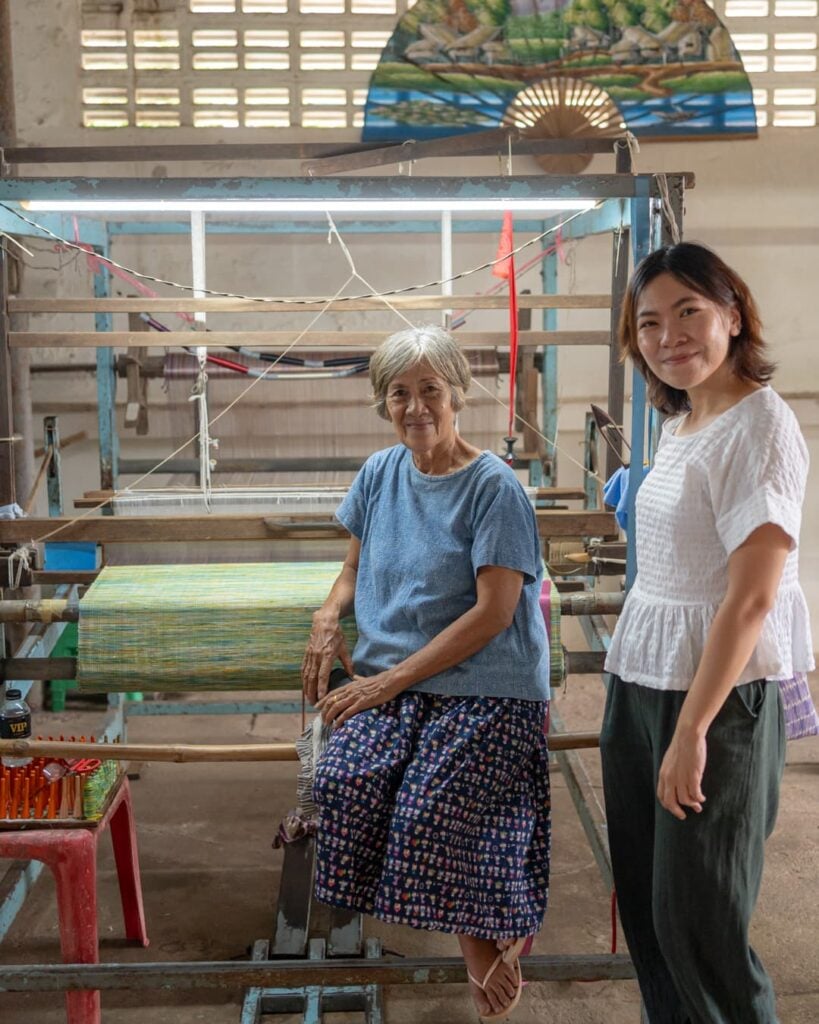
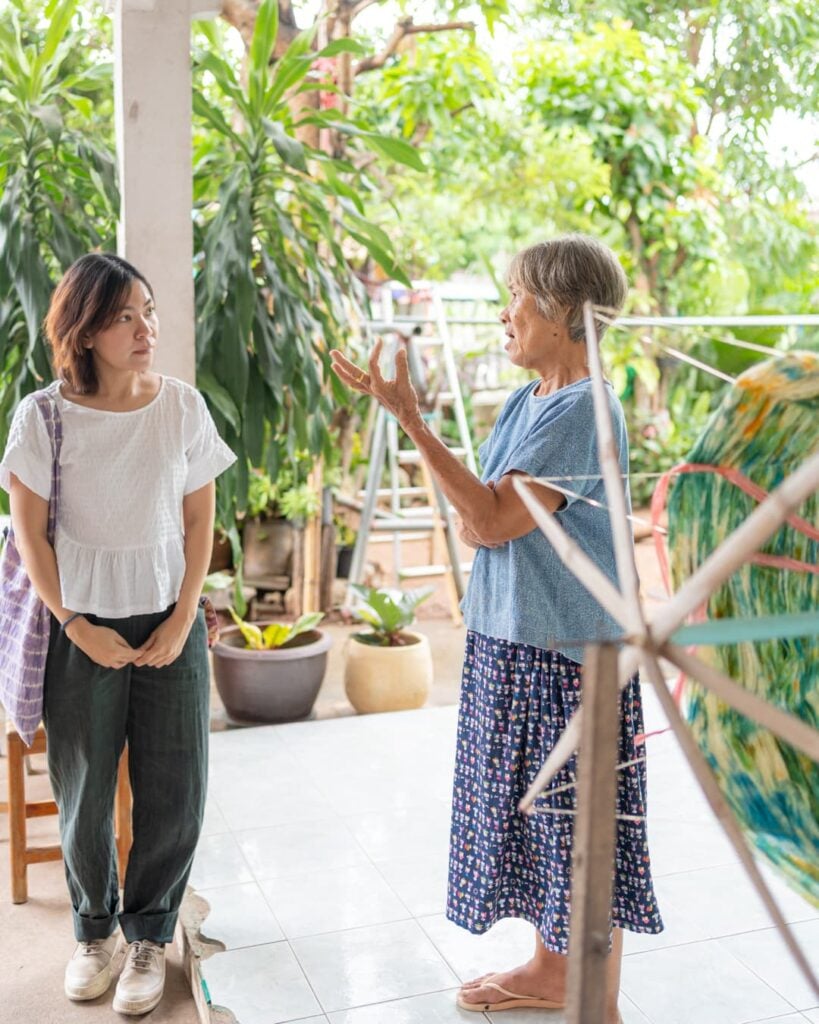
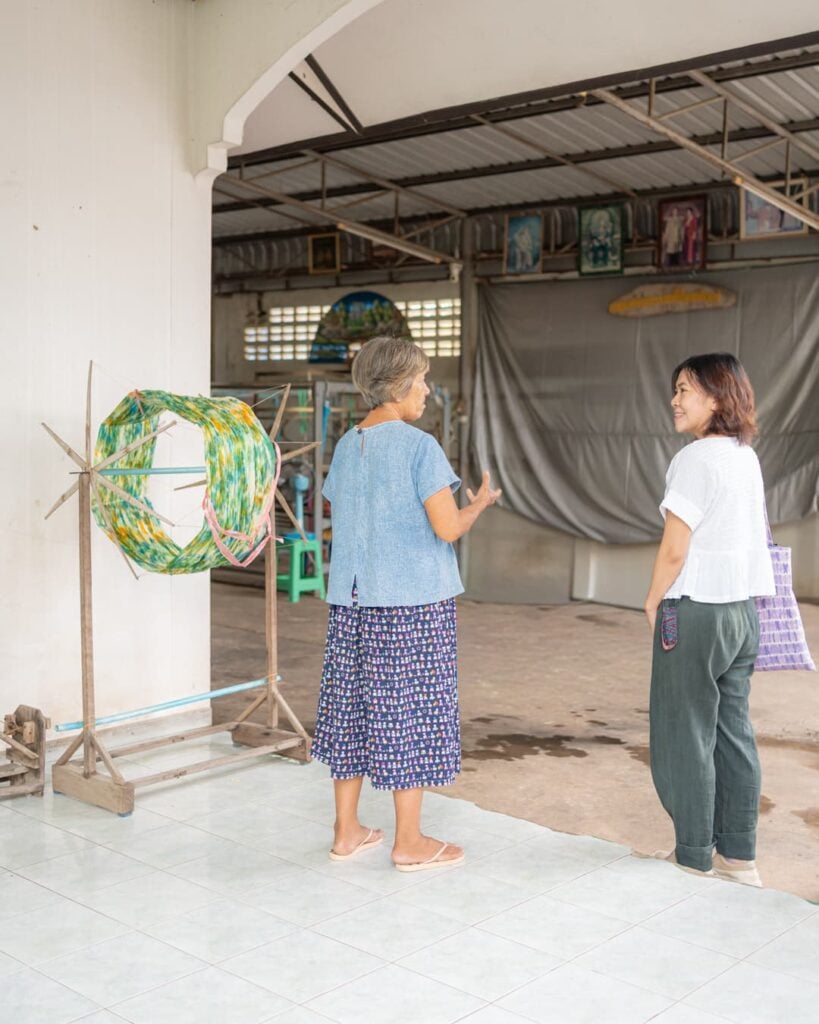
In 2026, we returned to Baan Duu in Pak Thong Chai, Nakhon Ratchasima, to visit Mae Nom, founder of the Baan Duu Handwoven Silk Group.
Our relationship with Baan Duu began five years earlier, during our research for Thailand Biennale Korat 2021, when the Biennale organisers introduced us to Mae Nom and the weaving group. What began as a project developed through silk, dye and distance has continued into an ongoing material conversation.
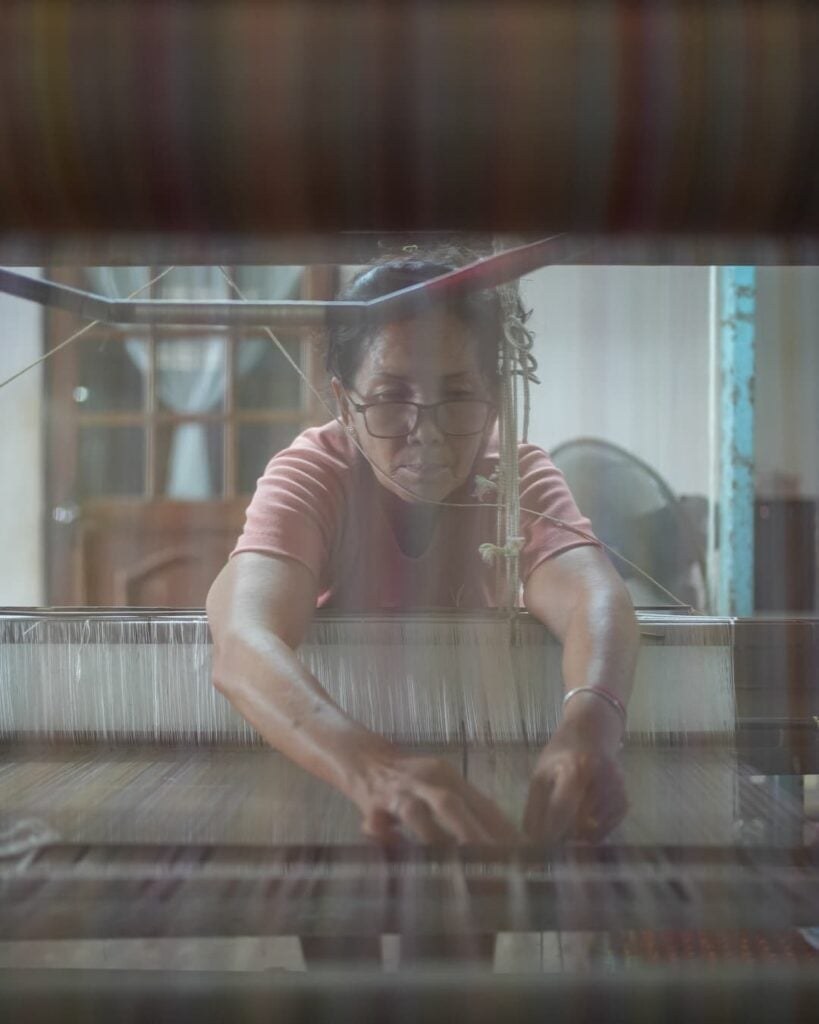
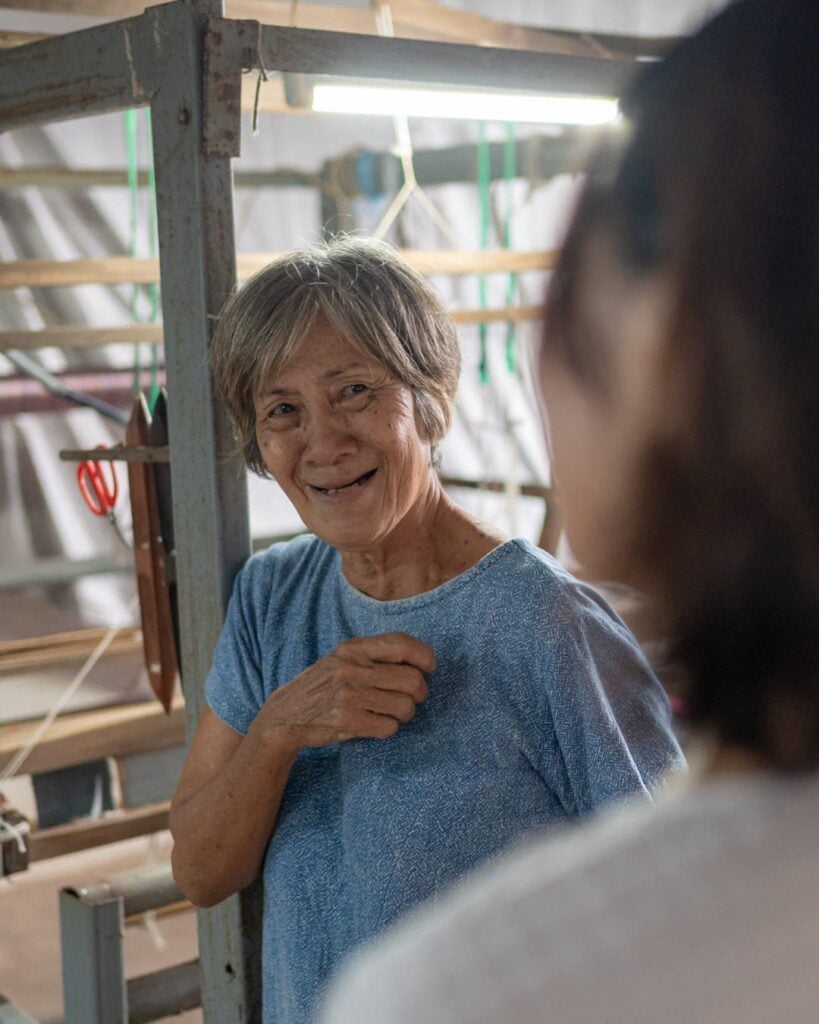
Now seventy-eight, Mae Nom has spent most of her life around silk and the loom. When we asked what she still loved most about weaving after all these years, her answer was immediate: arranging the threads with her own hands, watching the pattern gradually appear, and the sound of the loom itself.
A Life Around Silk
Mae Nom grew up watching her parents and grandparents weave cotton and silk for clothing, blankets, ceremonial textiles and household use. Weaving was part of everyday life: knowledge learned through watching, repeating and working alongside others.
In 2000, she founded the Baan Duu Handwoven Silk Group. At the time, many households in the village wove independently and sold their finished cloth to middlemen passing through the area. Mae Nom saw how this system could disadvantage individual weavers, while competition between households also created divisions. Bringing the makers together offered another way to work.
More than twenty-five years later, around a dozen artisans remain active. Some have been part of the group since its early years, although many now weave less frequently as they grow older.
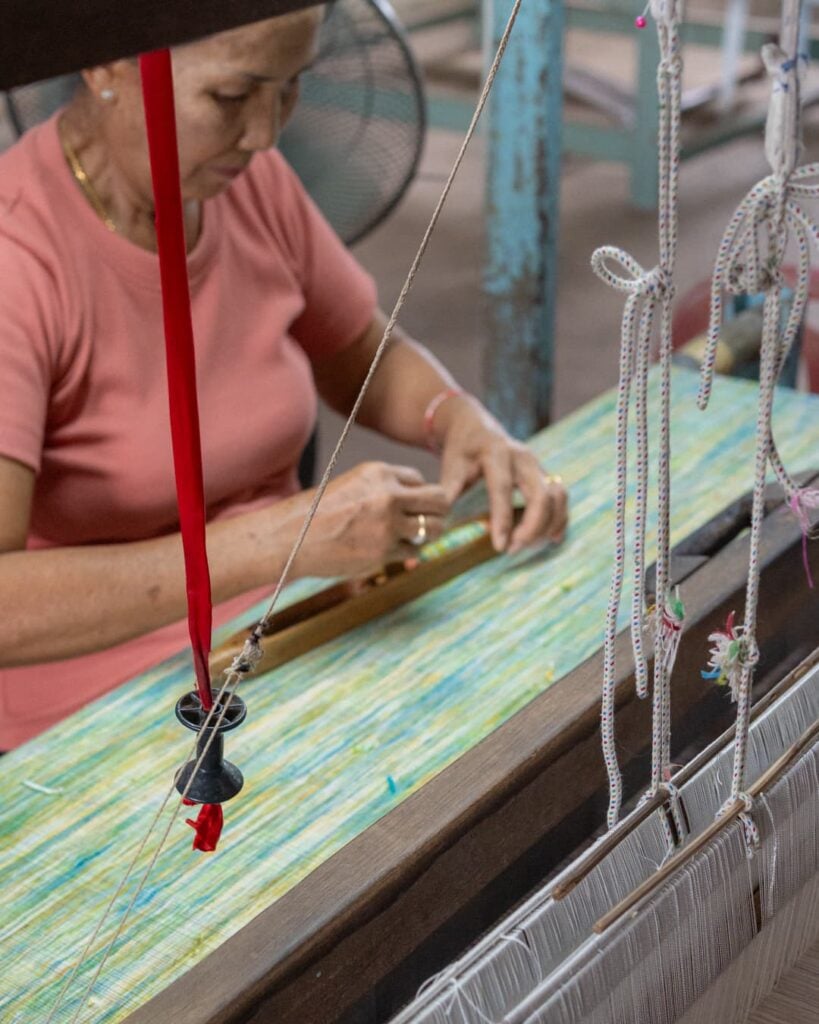
During our visit, we watched one of the older members weaving a length of silk for our current work. Seen at the loom rather than as finished cloth, the process makes visible how much of weaving depends on accumulated physical knowledge: how the hand moves, how the threads are read, and how tension is adjusted almost without pause.
Knowledge Held in the Hands
Baan Duu is known for precise silk weaving, including pha mai hang krarok, in which differently coloured silk threads are twisted together before weaving, and mudmee, or weft ikat, where sections of silk are resist-tied and dyed before being placed on the loom.
Mae Nom told us that some mudmee patterns used within the community have never been formally recorded.
There may be no diagram or digital file. The makers remember them.
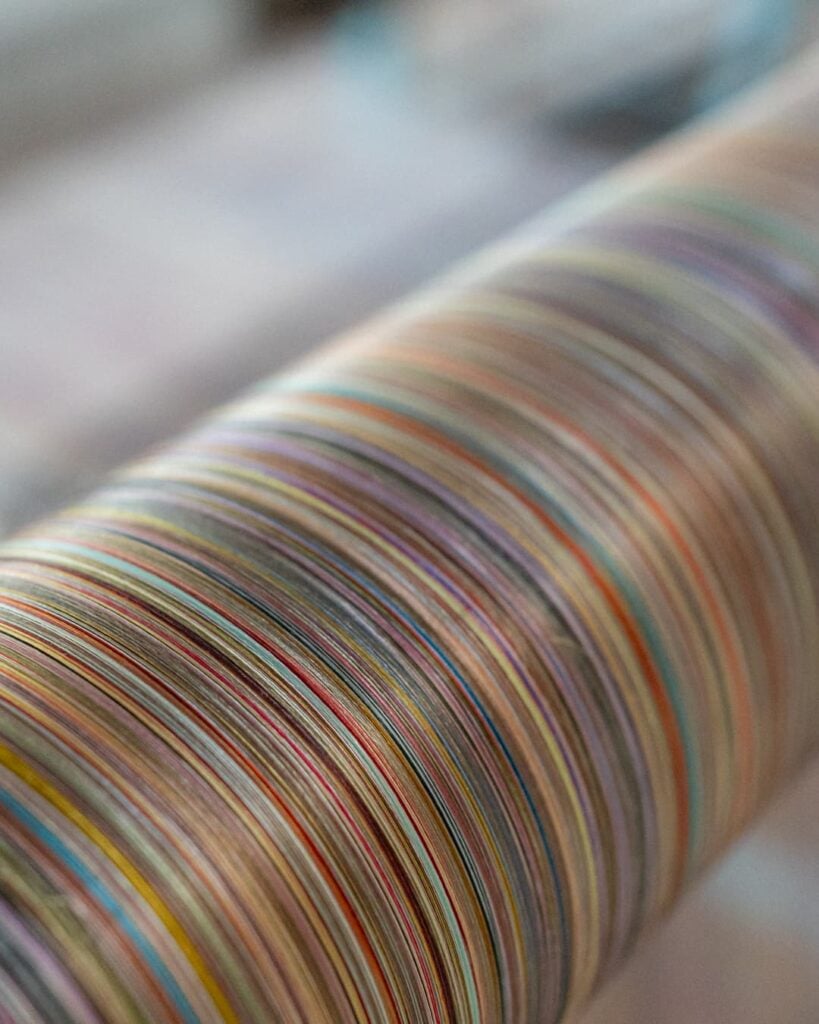
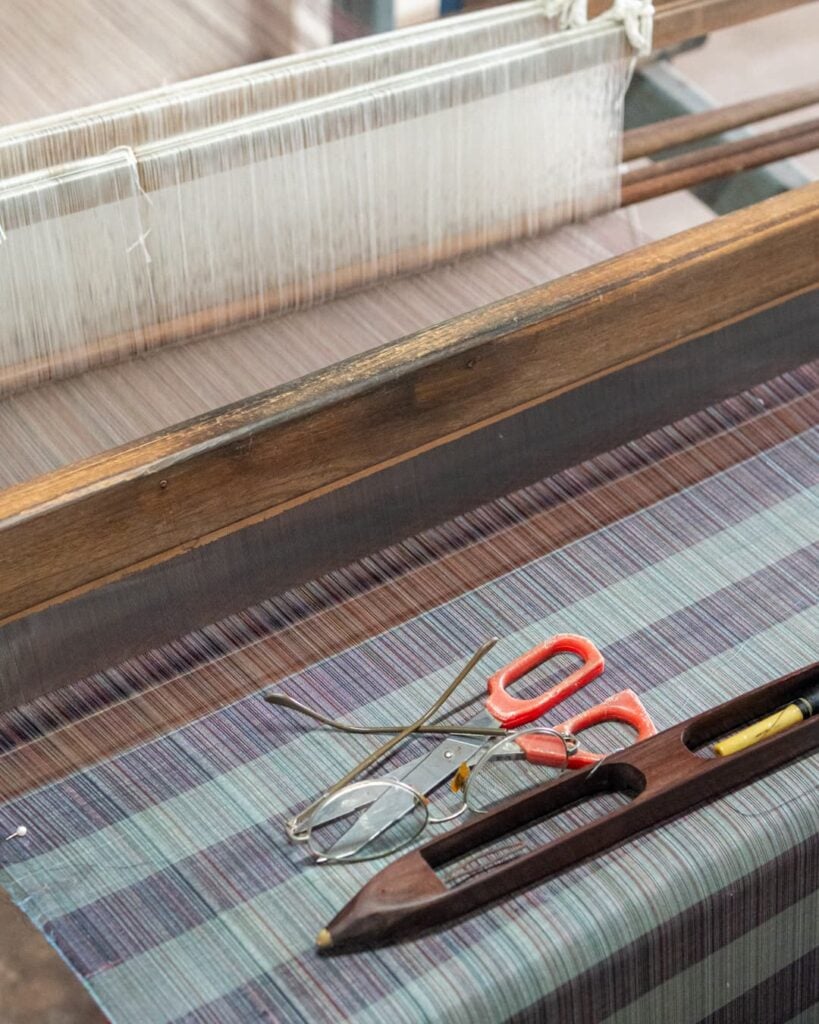
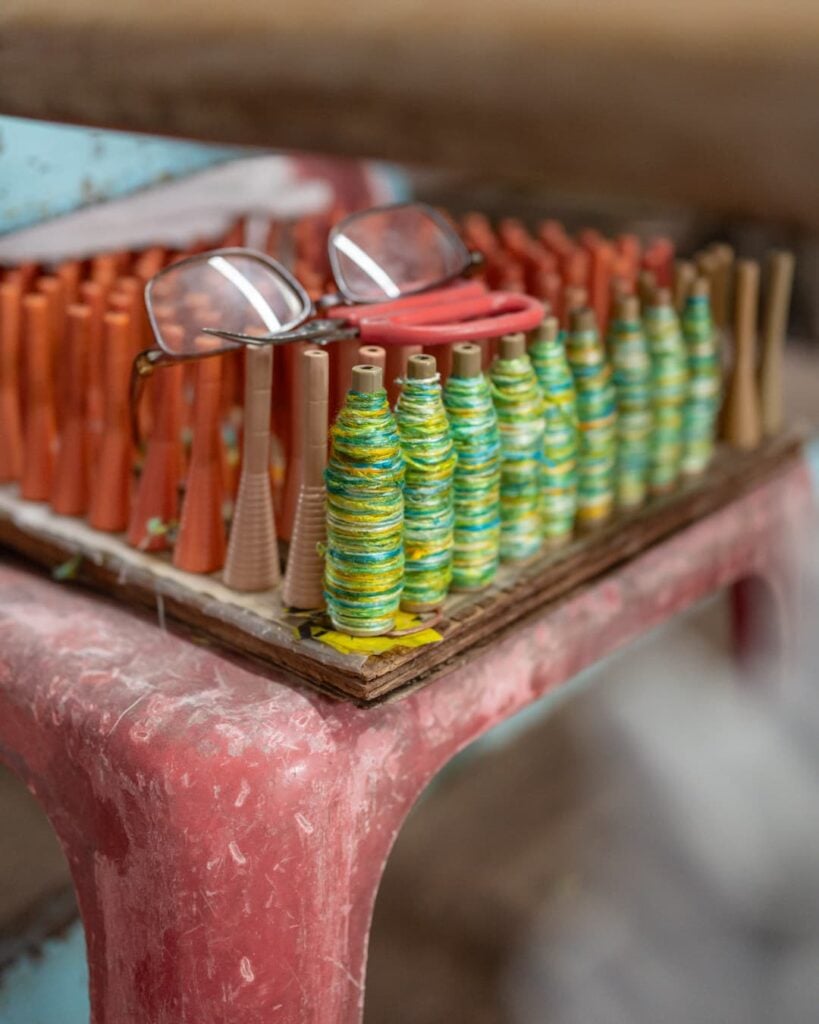
Someone who has tied mudmee for decades knows where each binding belongs. A weaver understands the spacing of the threads and the tension needed to keep the structure consistent. Distance is judged by eye; pressure through the fingers. The pattern exists in memory before it becomes visible in cloth.
This kind of knowledge is difficult to separate from the act of making. It develops through repetition, observation and touch. A diagram can record a pattern, but not necessarily the small physical decisions that allow it to be made well.
For knowledge like this to remain active, it has to continue being practised.
A Conversation Through Silk
Our first collaboration with Baan Duu developed for Thailand Biennale Korat 2021.
The Baan Duu artisans prepared mudmee-tied silk for the project. Some sections used patterns already practised within the group; others were developed from designs we provided. The prepared yarn was sent to our studio for natural dyeing, then returned to Baan Duu to be woven.
The two processes approached the material differently.
Baan Duu’s weaving depends on precision: the alignment of threads, the logic of pattern and a close understanding of the loom. Our dyeing process introduced a less predictable element. Colour was allowed to move through the bound silk without determining exactly where every tone would later fall in the finished textile.
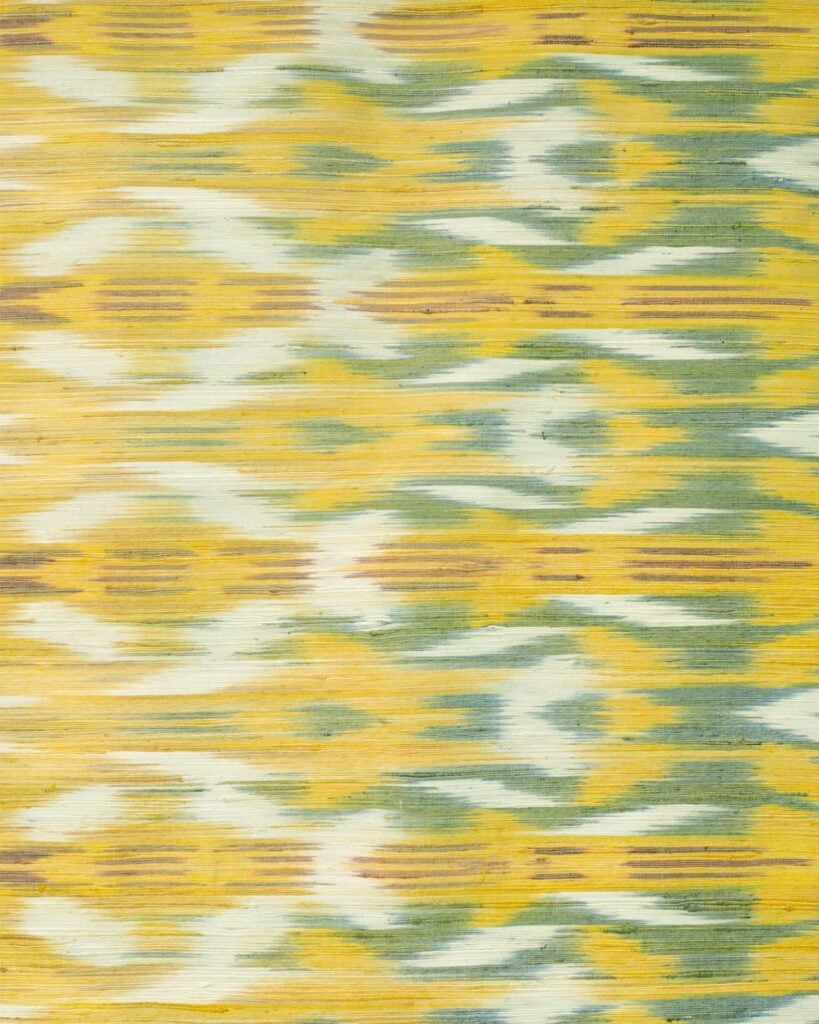
"Shuttle Stories" - Exhibition for Thailand Biennale Korat 2021
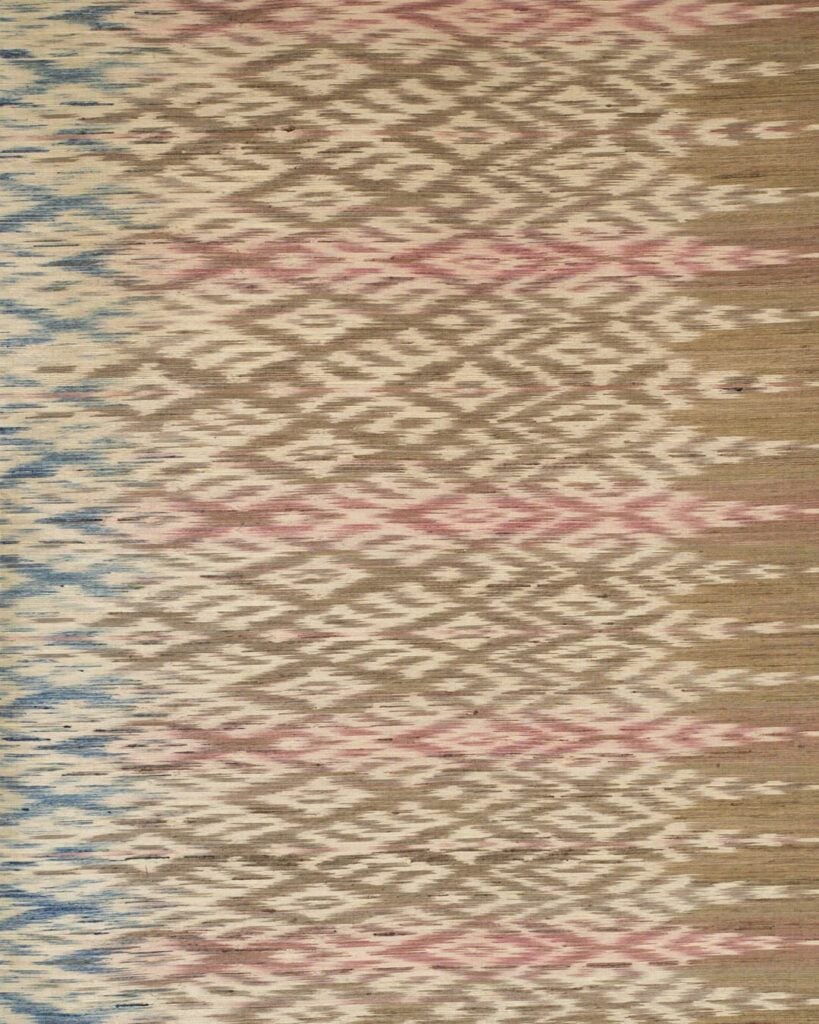
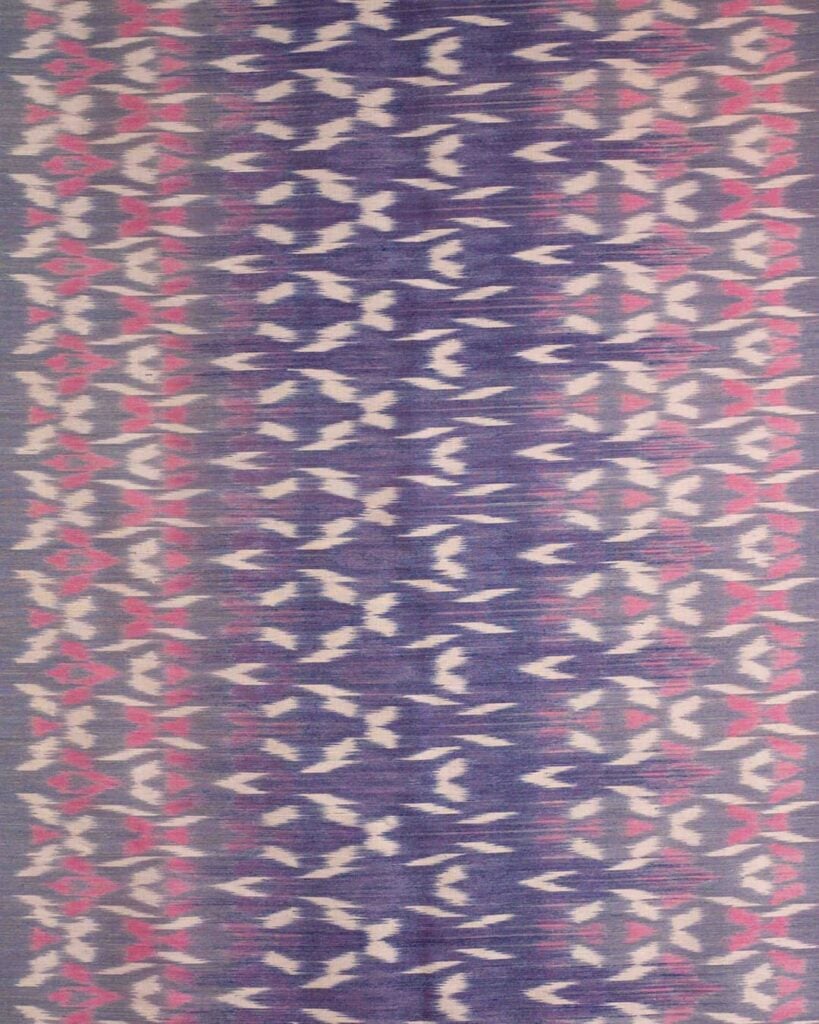
Before weaving, parts of the dyed yarn could appear almost disconnected. On the loom, that looseness was reorganised by the structure of the weave. Colours began to form rhythms and relationships that could not have been completely anticipated from the yarn alone.
Six textiles emerged from that exchange: works shaped by two different approaches to the same material.
The collaboration also took place during the COVID-19 pandemic, when we could not work together physically. Communication happened through phone calls, photographs and parcels travelling between Chiang Mai and Korat.
The silk moved between us.
One set of hands prepared the yarn. Another dyed it. It returned to Baan Duu and passed through the loom. Each stage responded to something that had happened elsewhere.
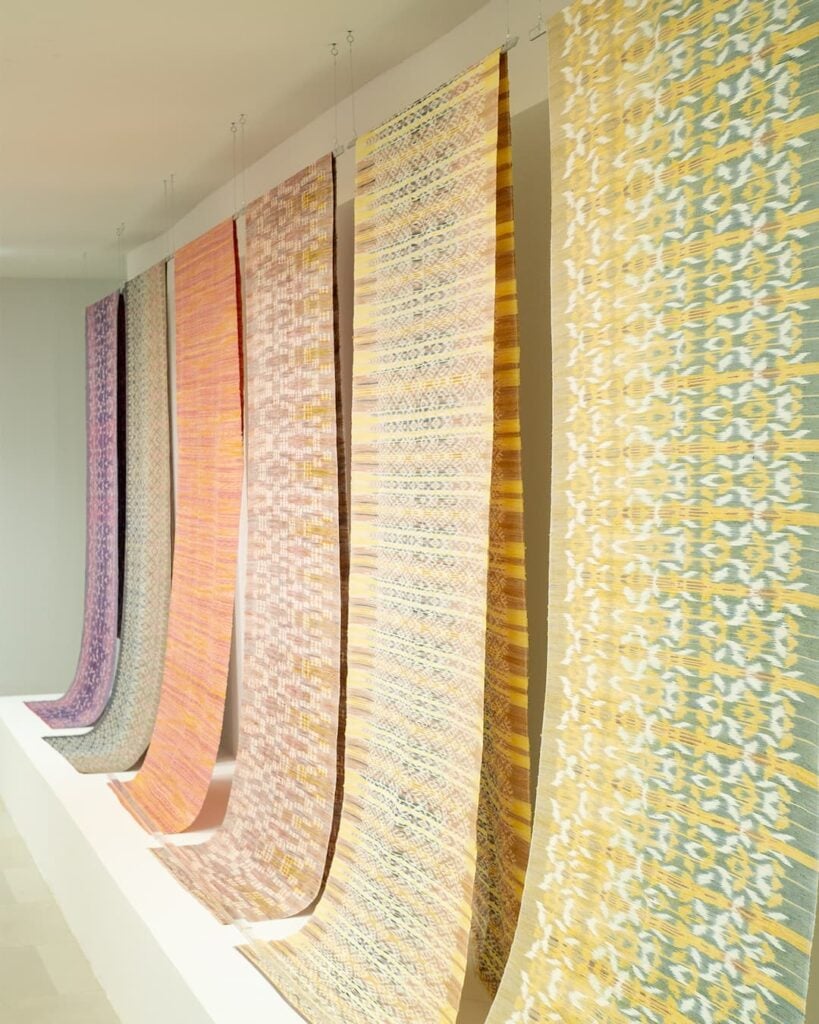
"Shuttle Stories" - Exhibition for Thailand Biennale Korat 2021
Returning to the Material
When we returned to work with Baan Duu in 2026, we wanted to continue the collaboration with fewer predetermined elements.
This time, we removed the mudmee pattern.
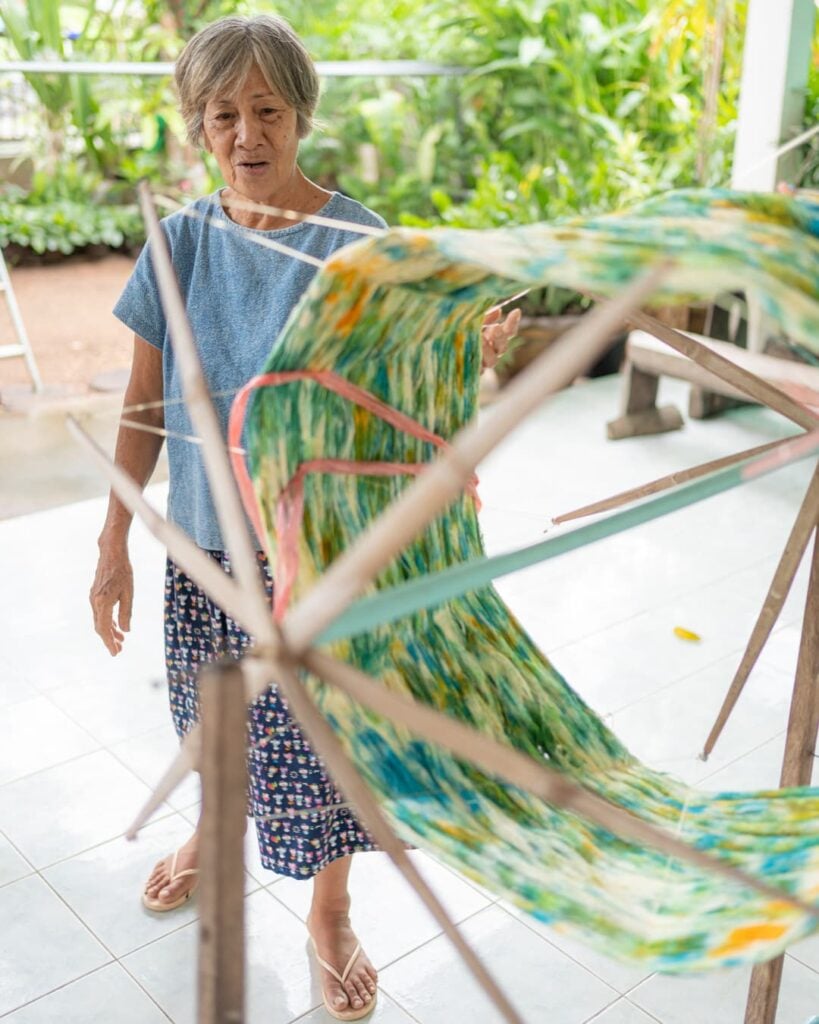
We asked the group to source a thicker, textural hand-spun silk similar to yarn we had encountered during the earlier project. The silk came to our studio for dyeing before returning to Baan Duu to be woven.
Without a predetermined motif, more attention falls on the yarn itself.
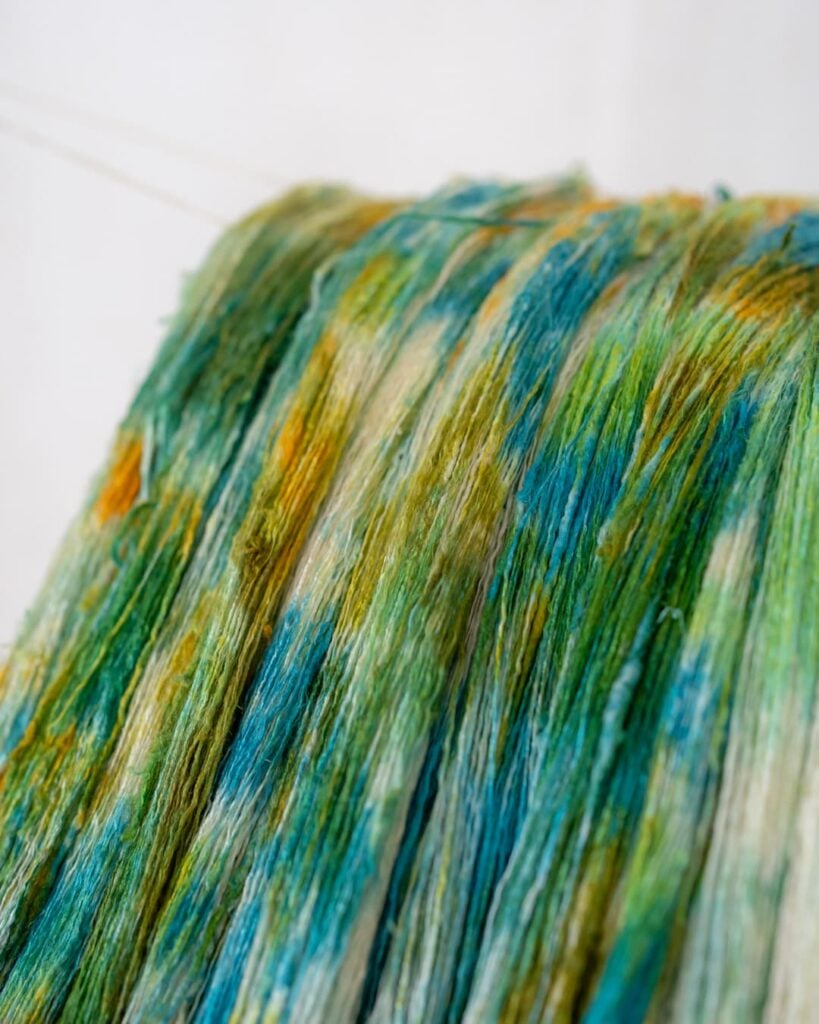
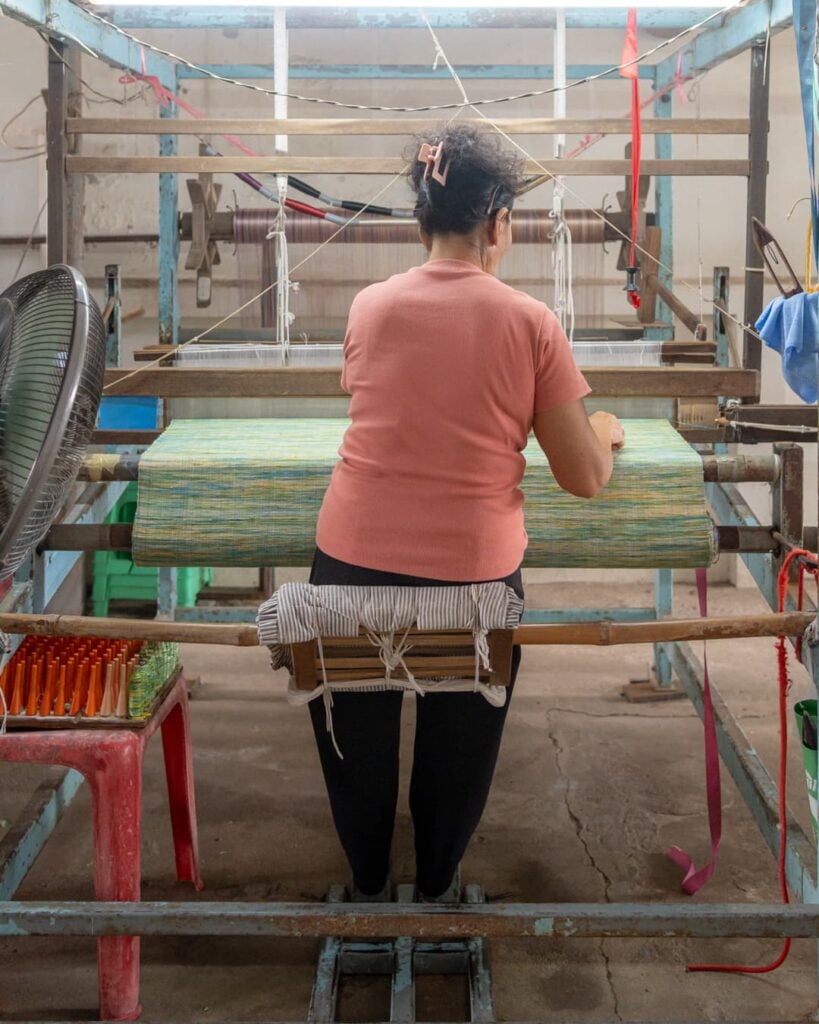
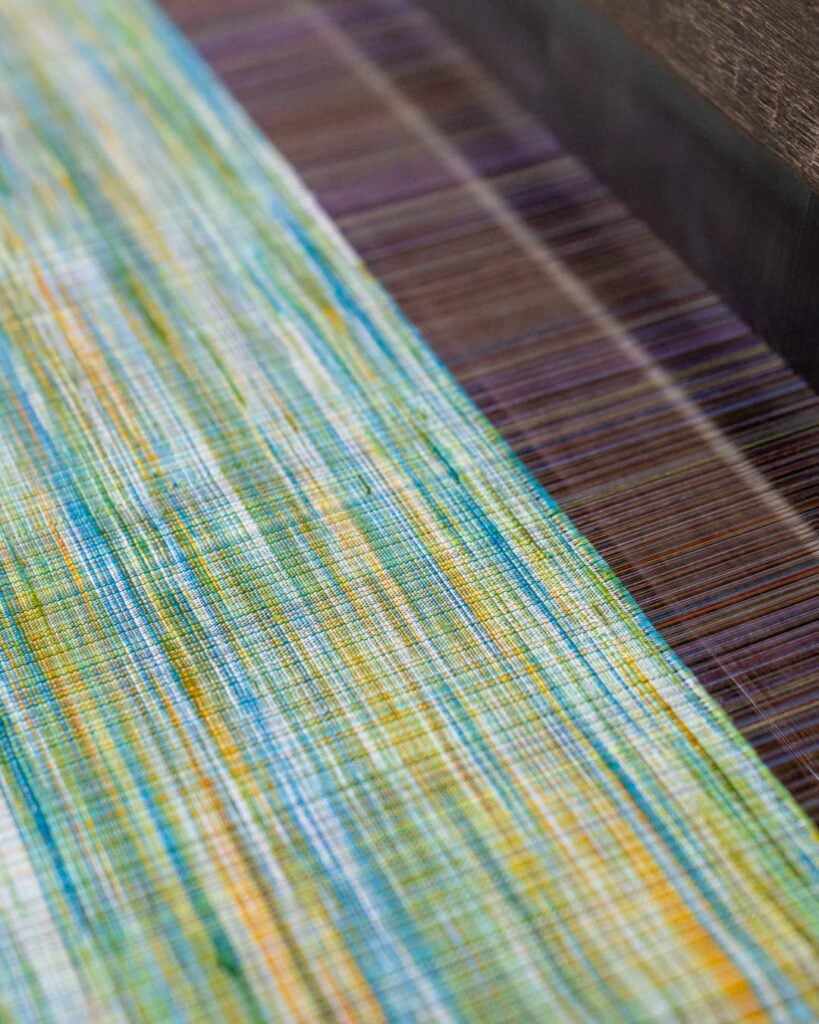
Hand-spun silk shifts subtly in thickness. Once woven, these differences interrupt the regular surface of the cloth, producing areas of greater density and texture. The movement of the dye introduces another variable: colour does not sit uniformly across the threads, and its relationships become fully visible only after weaving.
The resulting surface comes from the meeting of two systems.
The loom brings order, repetition and structure. The yarn and dye retain their own irregularities.
Neither disappears.
This tension has become one of the reasons we returned to the collaboration: to see what happens when Baan Duu’s precise weaving meets a process in which some part of the final surface remains unresolved until the material passes through the loom.
The Finished Pieces
The palette took its cues from the landscape around Korat: green from the fields and roadside growth, blue from the open sky, yellow from dry grass and straw, and cream from the natural colour of the silk itself.
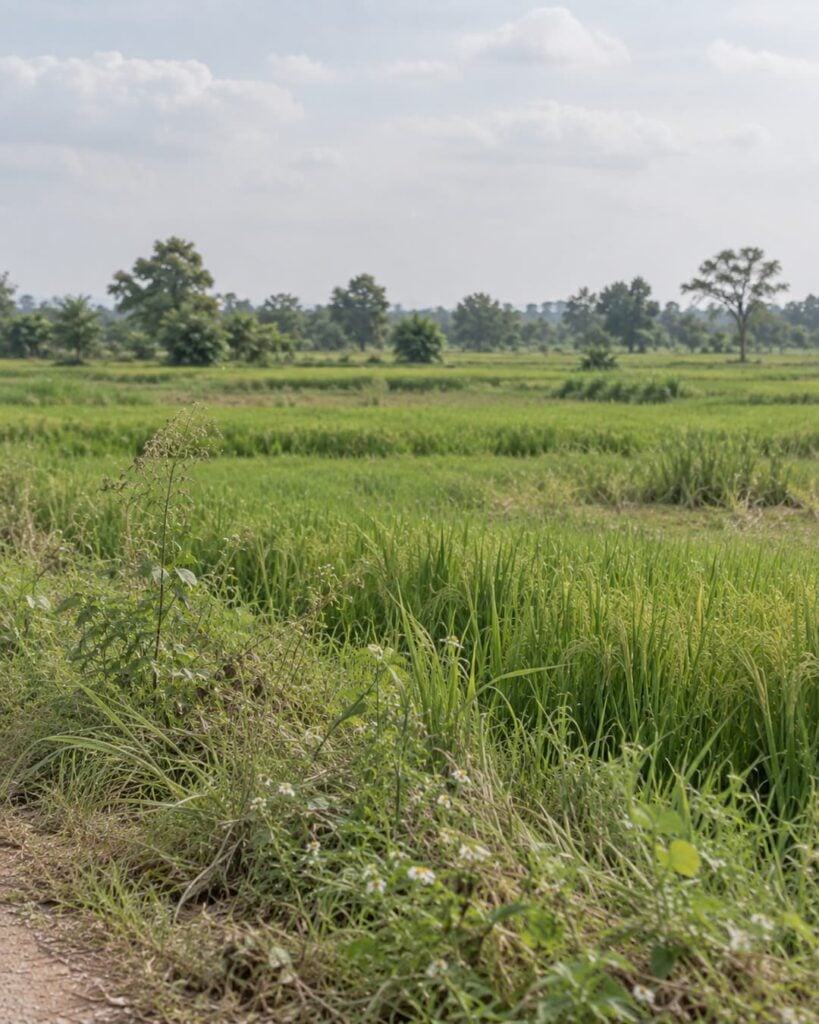

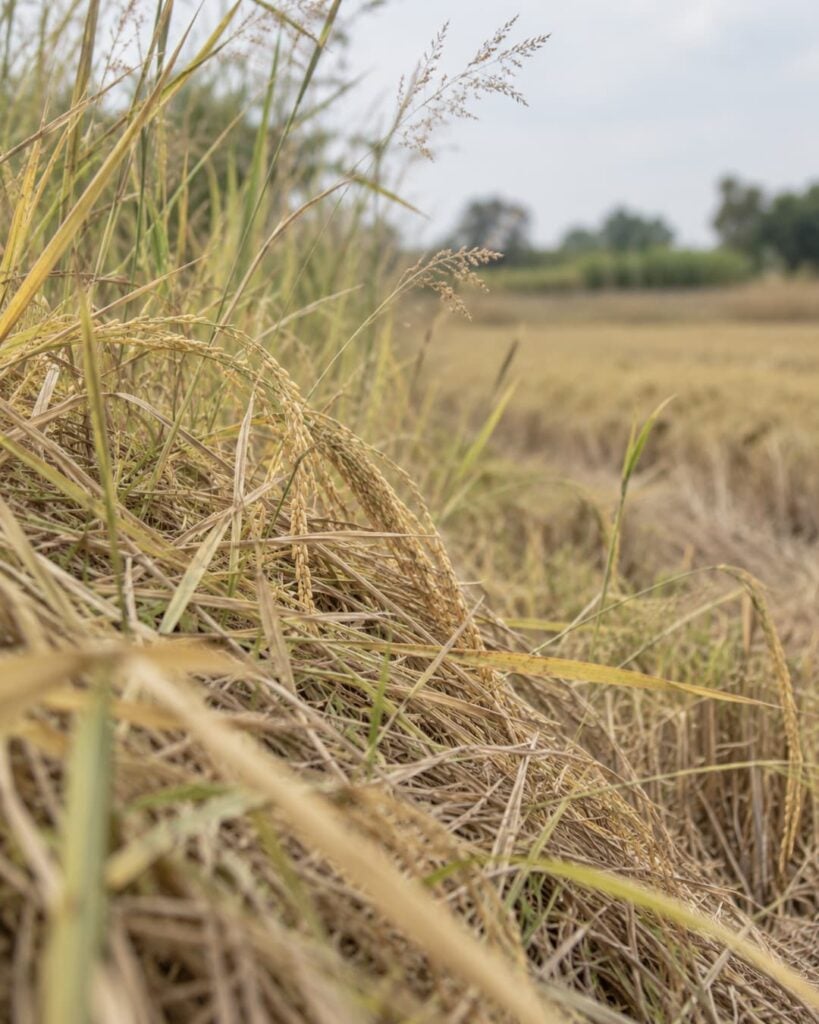
Once the finished textile returned to our studio, the next question was how to carry those colours and the woven surface into finished forms.
The cloth became a jacket, a tote bag and a flat pouch. Each holds the textile at a different scale. Across the jacket, the colours move over the body. The tote preserves a broader section of the weave, while the pouch draws attention to a smaller part of the surface.
Smaller offcuts became mounted textile cards, placing individual fragments of the cloth on heavy white card paper. Removed from the scale of a garment or bag, each fragment can be viewed as a small composition in its own right.
The pieces complete another movement of the material: silk sourced by Baan Duu, dyed by Slowstitch, returned to Baan Duu for weaving, and brought back to our studio for cutting, construction and mounting.
Although the forms have changed, the cloth still carries the decisions that came before them: the irregular colour of the yarn, the steady structure of the weave, and the work of the hands at the loom.
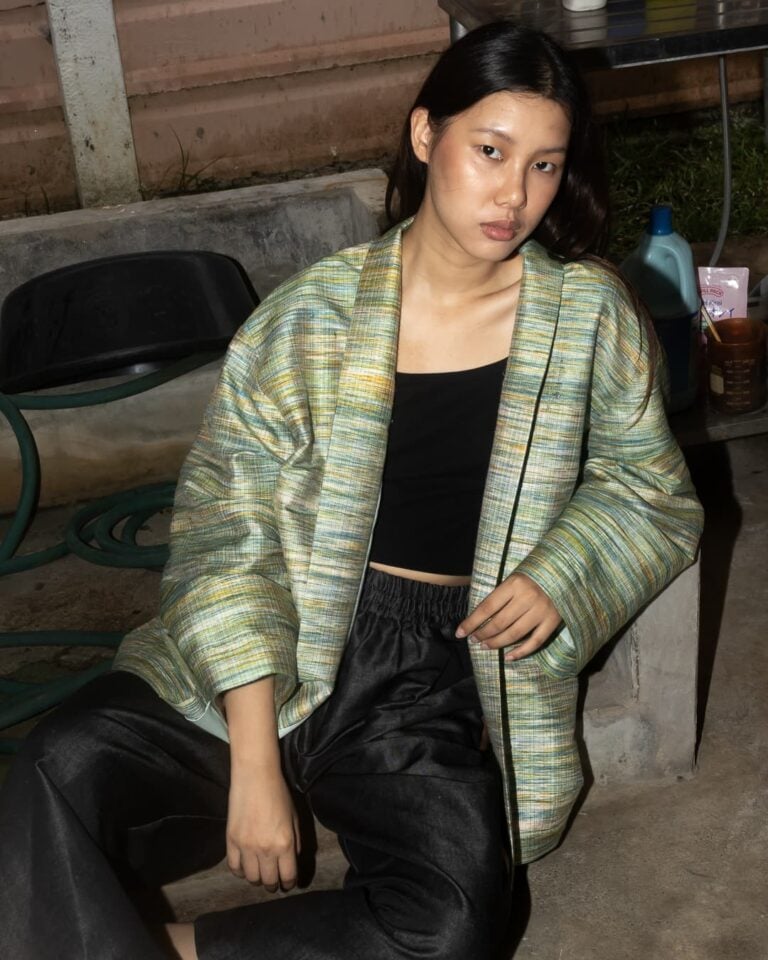
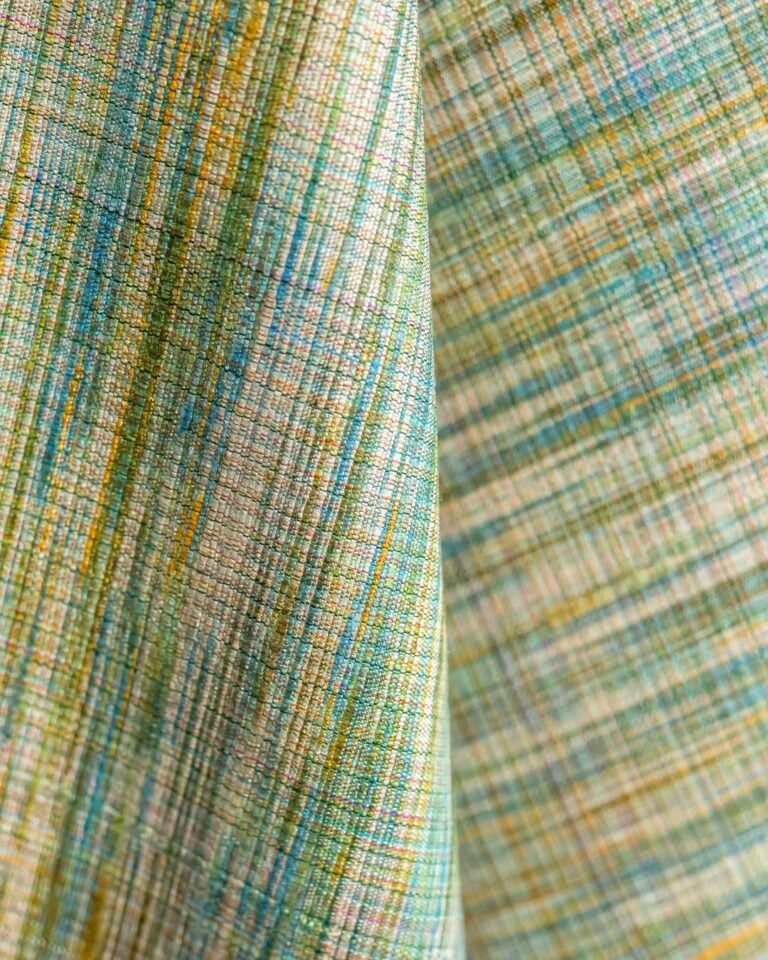
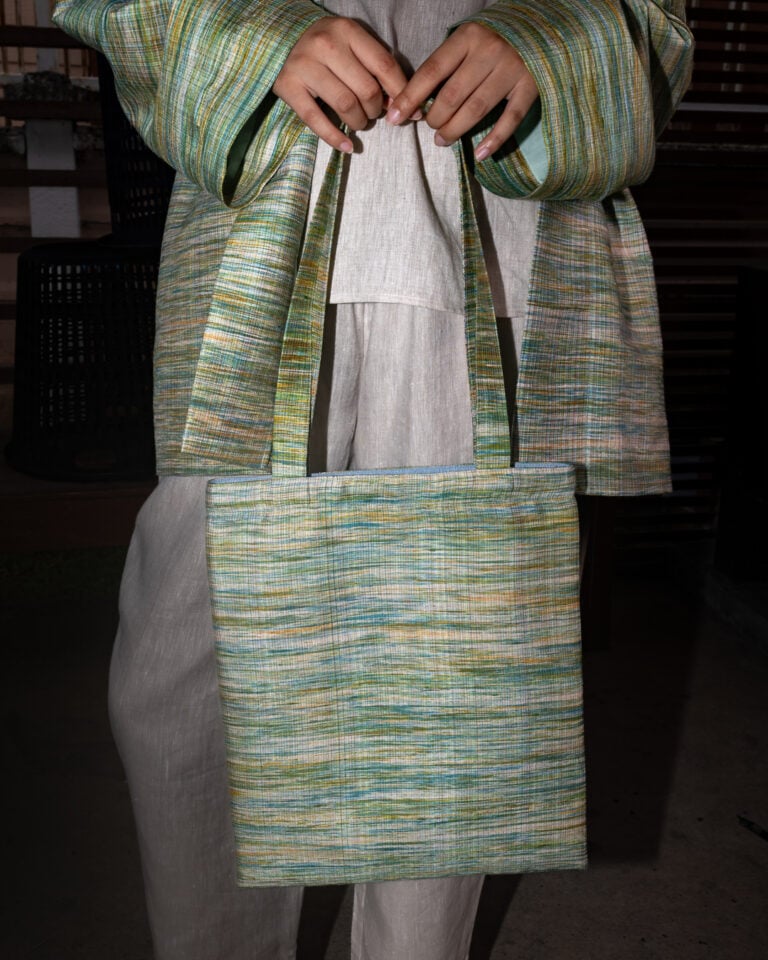
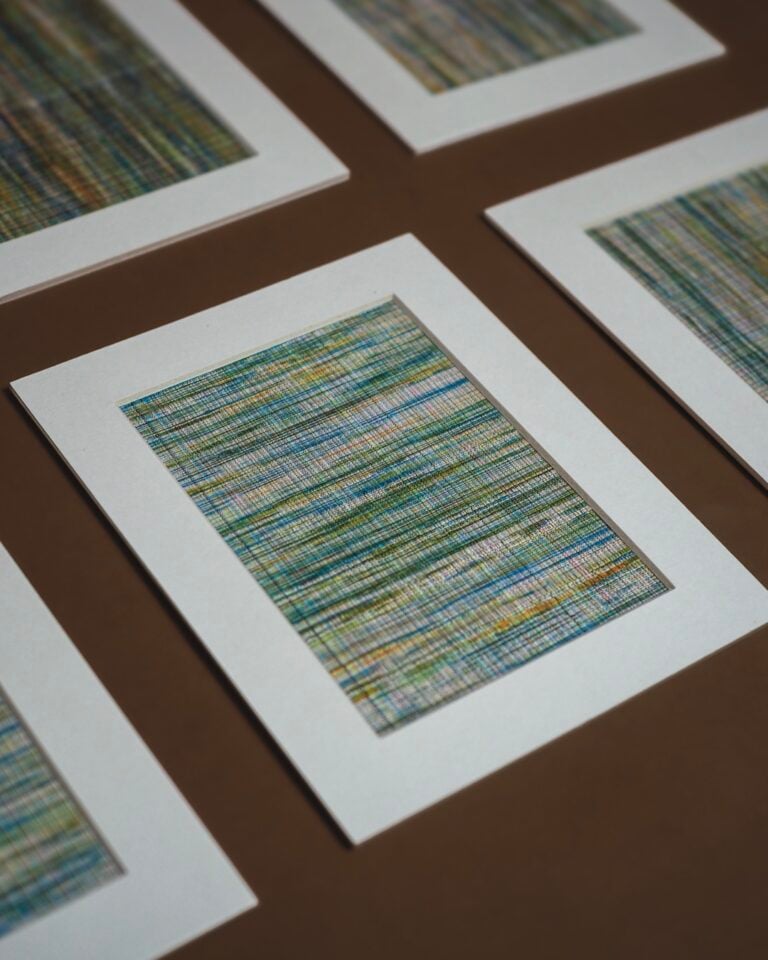
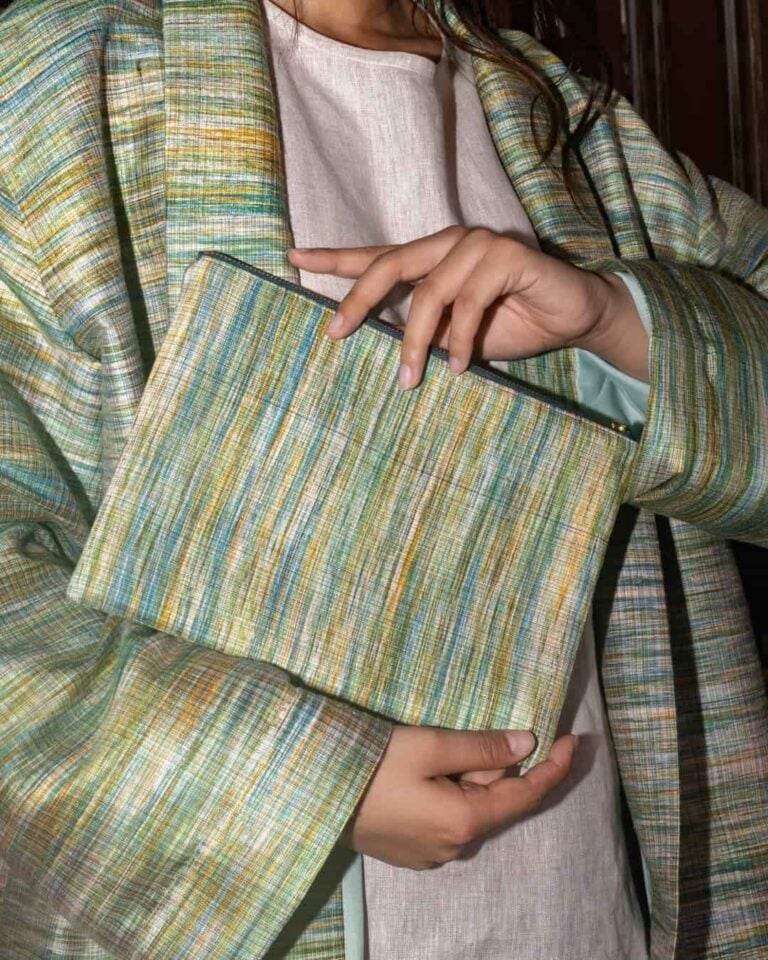
Explore the finished pieces made from silk dyed by Slowstitch Studio and woven by the Baan Duu collective.
The Sound of the Loom
Keeping the Baan Duu group active for more than two decades has required Mae Nom to do much more than weave. She has had to find ways to sell the textiles, communicate their value, work with organisations outside the village, participate in exhibitions and competitions, and consider how the knowledge might continue as the group’s members grow older.
Yet when we asked what remained most meaningful to her, she did not begin with any of these things.
She spoke about the physical act of weaving.
Arranging the silk.
Watching the pattern appear slowly in front of her.
And the sound of the loom.
It is a small answer, but perhaps an exact one.
Much of what sustains a textile practice is difficult to isolate from the act itself: a distance recognised without measuring, tension adjusted through touch, a movement remembered because the body has performed it thousands of times.
And a familiar sound, heard over a lifetime, that still makes someone want to sit at the loom.