BY SLOWSTITCH TEAM
Helping Hands
A short meditation on craft, continuity and legacy.
22nd June 2026
There’s a particular kind of solitude that comes with making things. Not loneliness – something more intentional than that. The craftsman working alone isn’t isolated so much as concentrated. Everything flows inward: the attention, the decisions, the failures, the small private victories. It’s a world that fits inside one person.
But that world is also fragile. It depends entirely on the continued presence and health and will of one individual. The work of a solitary craftsman could end for any number of reasons, and that would simply be that. An apprentice, assistant or fellow artisan changes this. Knowledge becomes more resilient once it exists in more than one mind. Over years of shared work, skills that once belonged to one person begin to take root in another. Suddenly the craft is larger than any one person. Its world has grown.
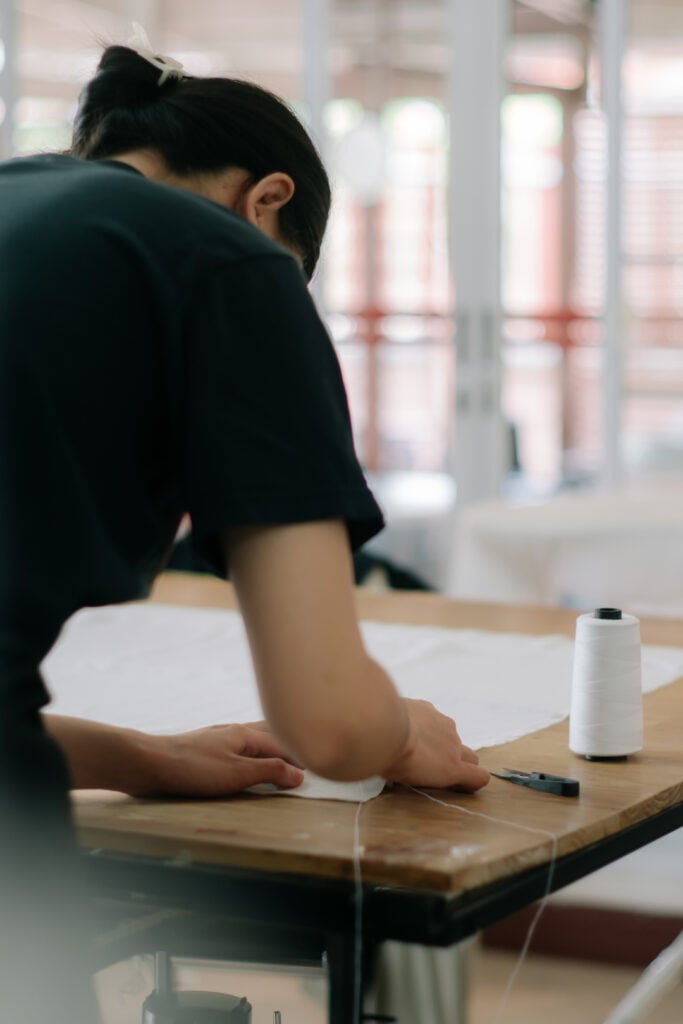
For anyone with a creative mind, that can be a frightening moment. Creatives are rarely comfortable with the idea of releasing control. The question shifts from “how do I make something beautiful and true” to “how do I build a process where that true and beautiful thing can come into existence even when I’m not in the room“. The focus shifts from personal achievement to something closer to legacy.
There is an old argument about what craft knowledge actually is – whether it can be fully taught, or whether it simply accumulates in the body through repetition, through proximity, through watching someone else’s hands long enough that your own begin to remember what they observed. The Japanese have a word for this kind of embodied understanding: karada de oboeru – to learn with the body rather than the mind. It describes something that no instruction manual can transmit. It has to be present in the room.
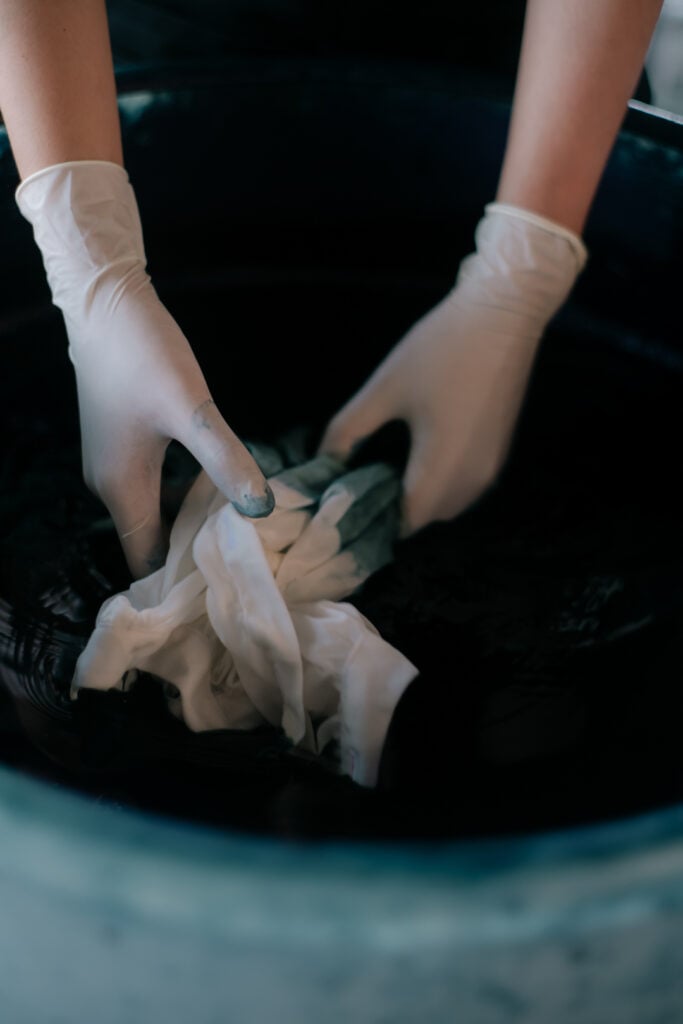
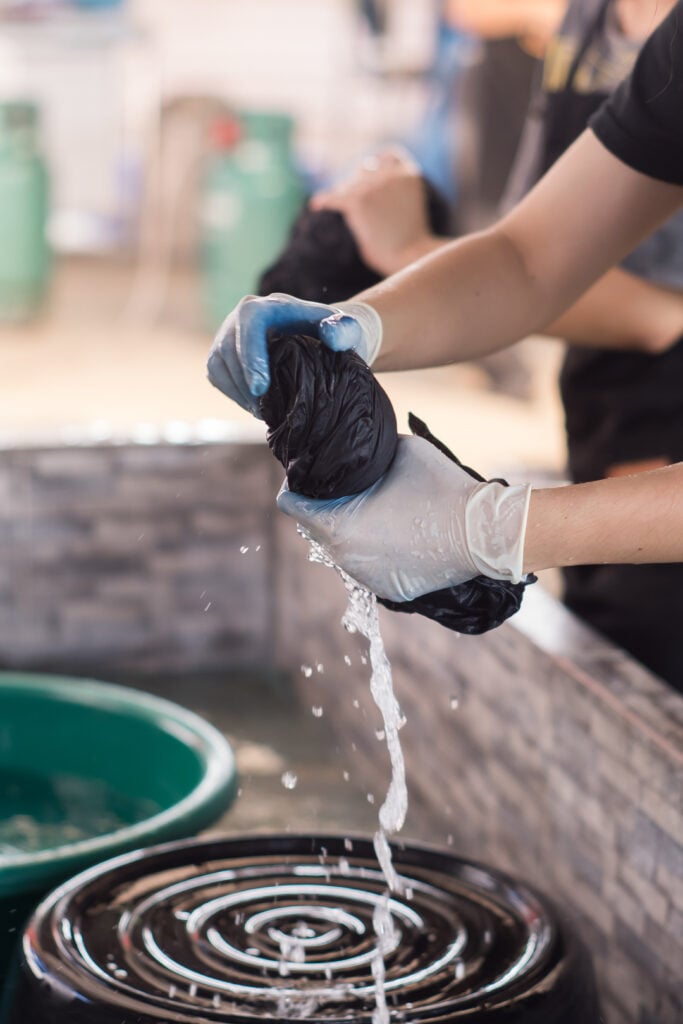
This is one reason why apprenticeship, in traditional craft cultures, was measured in years rather than months. The apprentice wasn’t simply learning a set of techniques. They were absorbing a way of seeing – a standard of attention, a tolerance for slowness, a feel for when something is right and when it is almost right, which is an entirely different thing. That distinction, between right and almost right, is perhaps the hardest thing to transfer. It lives somewhere between the eye and the hand, and it moves between people slowly, quietly, mostly without words.
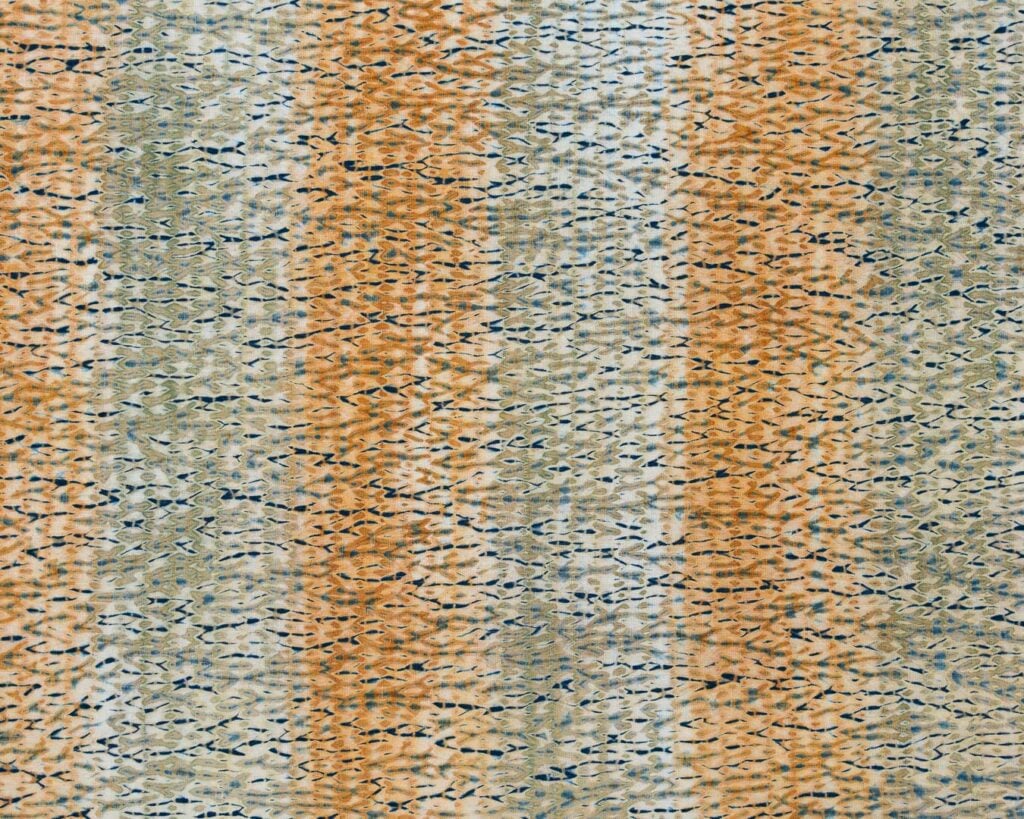
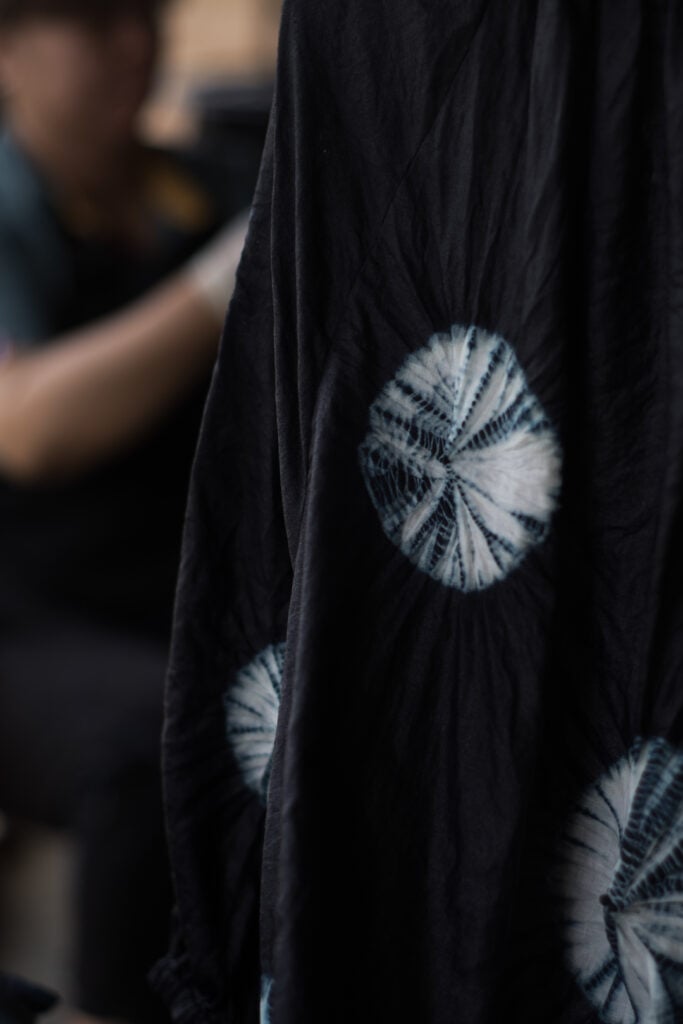
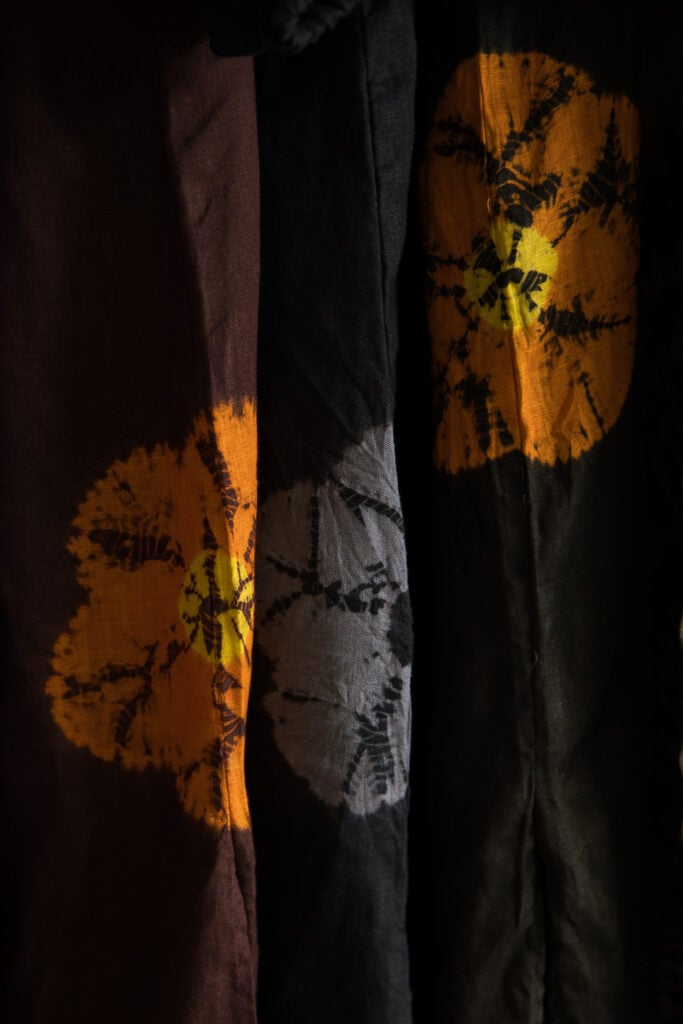
We think about this often in the studio. The knowledge we work with keeps going deeper the longer you’re in it. Shibori pattern-making, with its variables of fold, resistance, compression, sequence, produces combinations that have never existed before and can’t be exactly repeated. You don’t finish learning it. You just get further in. And that’s only the design. Below it sits the execution: the tension of a thread, the reading of the indigo vat, the way the same pattern can take various forms on different fabrics. That knowledge doesn’t live in the mind. It accumulates in the hands, slowly, over years – and it moves between people the same way.
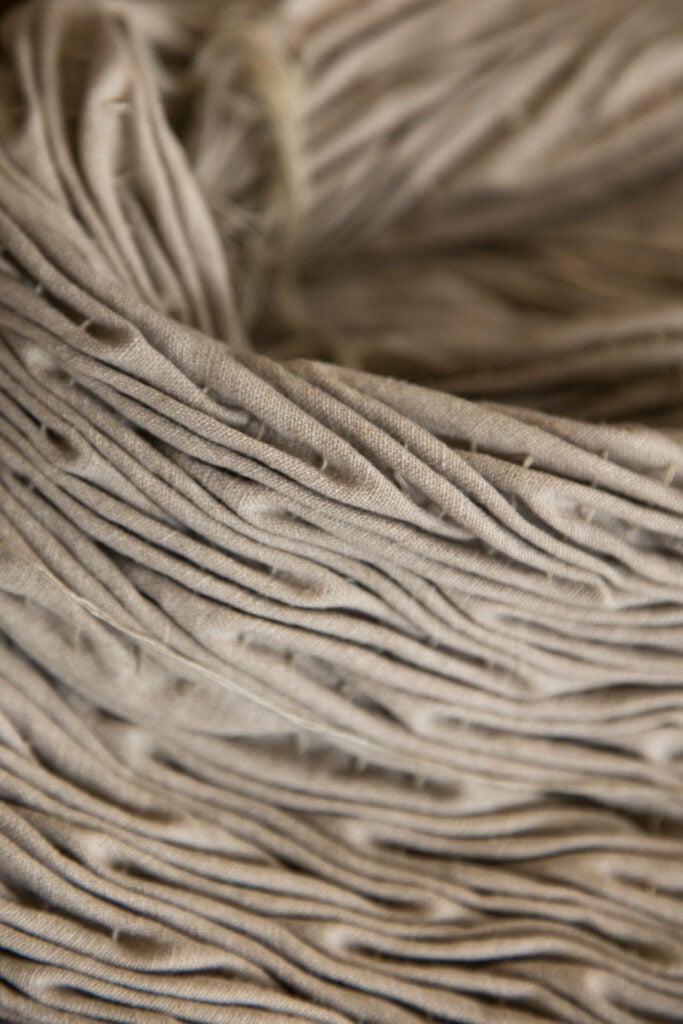
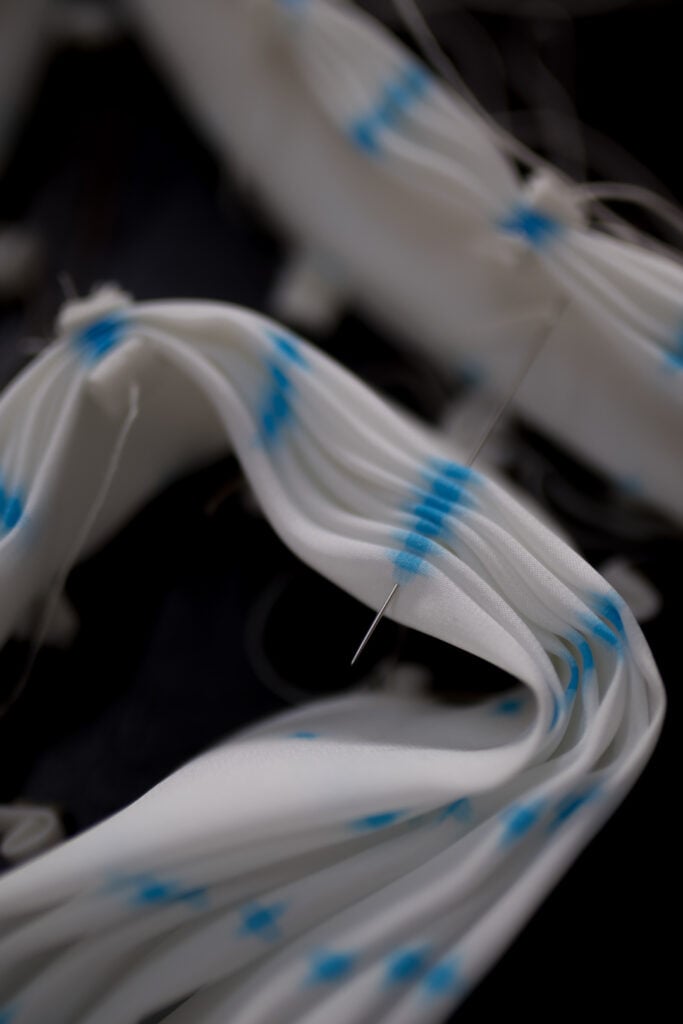
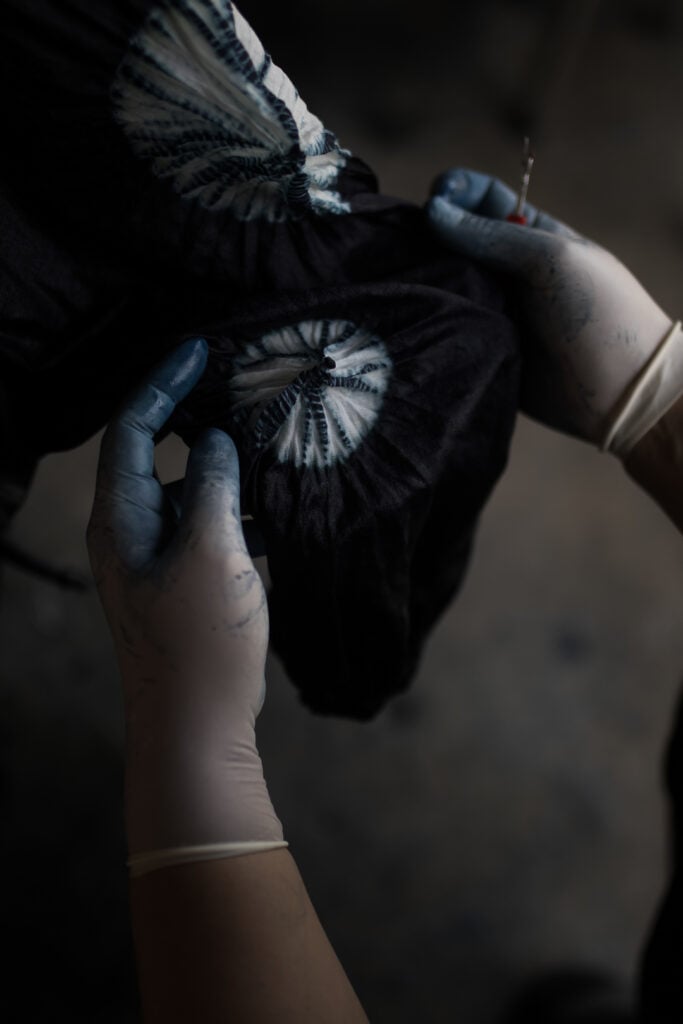
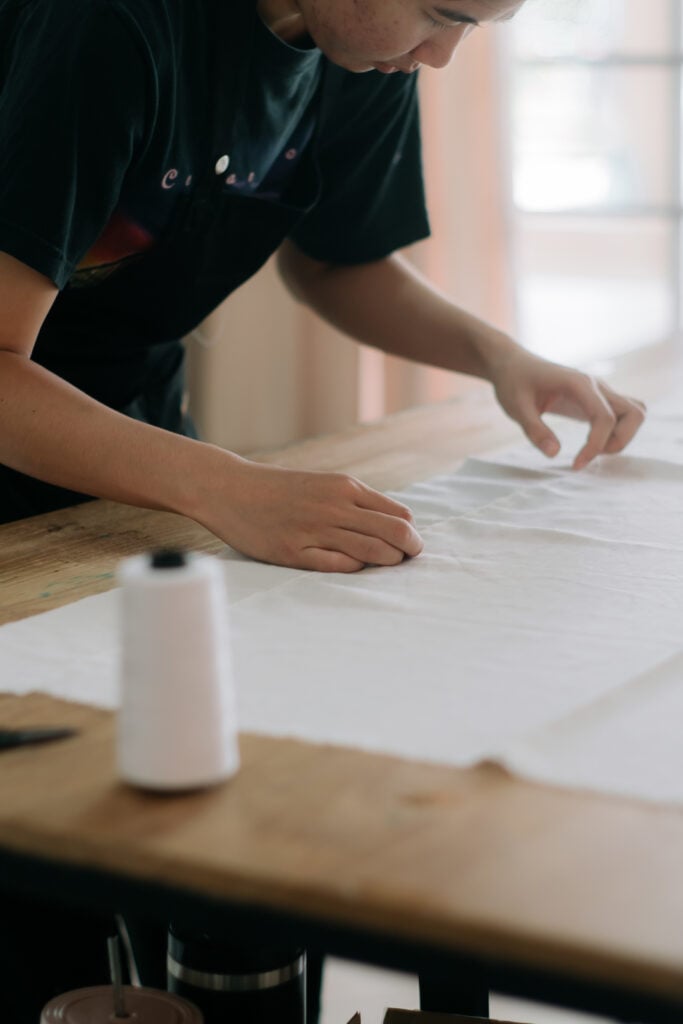
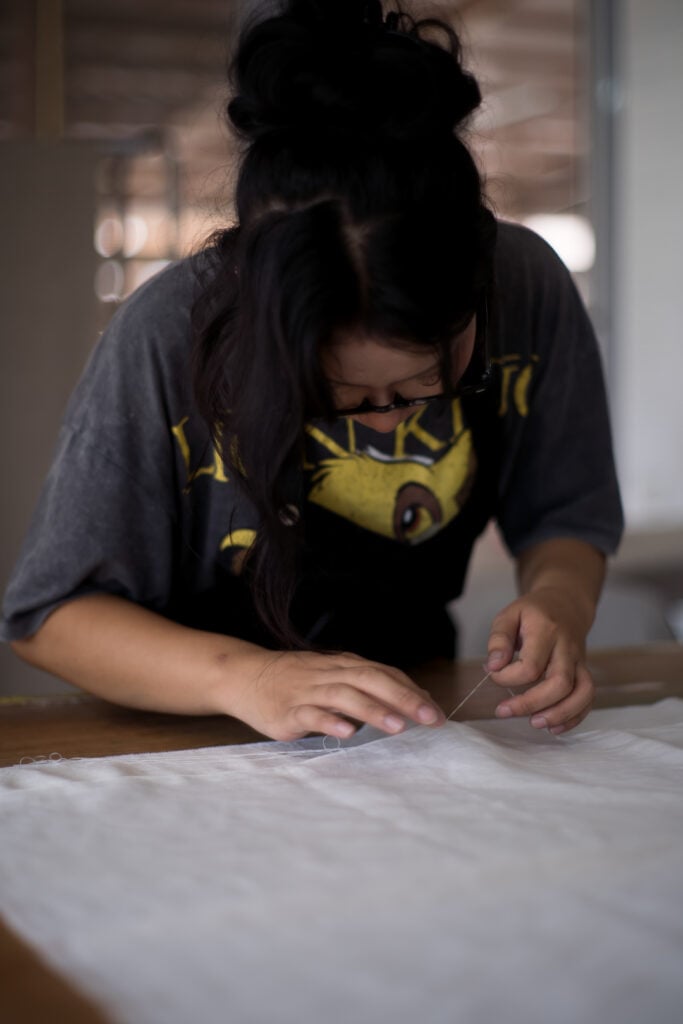
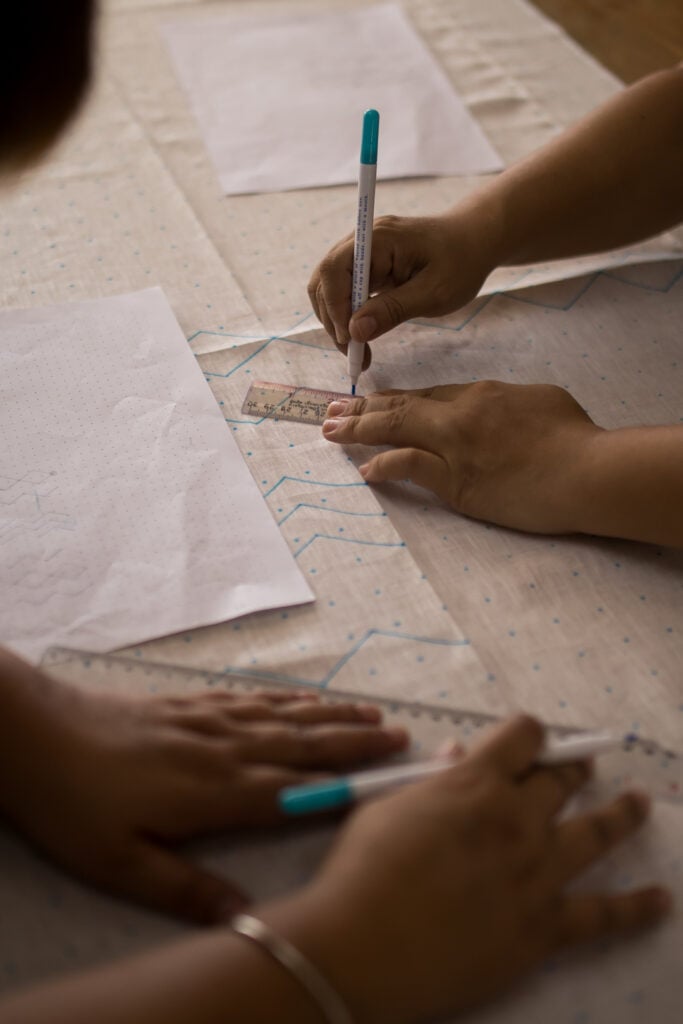
Building community was never a goal when we came to Chiang Mai a little over ten years ago. It emerged slowly, the way most good things do. Shibori is a long process – drawing the stitching guides, attaching border fabrics so the central piece carries an even pattern across its full width, stitching and pulling the cloth into compression, tying hundreds of threads one by one, dyeing in indigo, washing, ironing… And that’s before we even start cutting and garment construction. Each stage is deliberate and slow, and each one, we’ve come to understand, asks for more than one pair of hands.
What we didn’t anticipate was how much the presence of other people would change our relationship to the work itself. Not the designs – those have always remained ours, the vision intact. But the quality of attention in the studio shifted when more hands entered the room. There is something in shared labour that steadies the work. The repetitive stages – the threading, the binding, the careful tying of hundreds of knots – become less a test of individual endurance and more a kind of collective rhythm. The work breathes differently when it is not carried by one person alone.
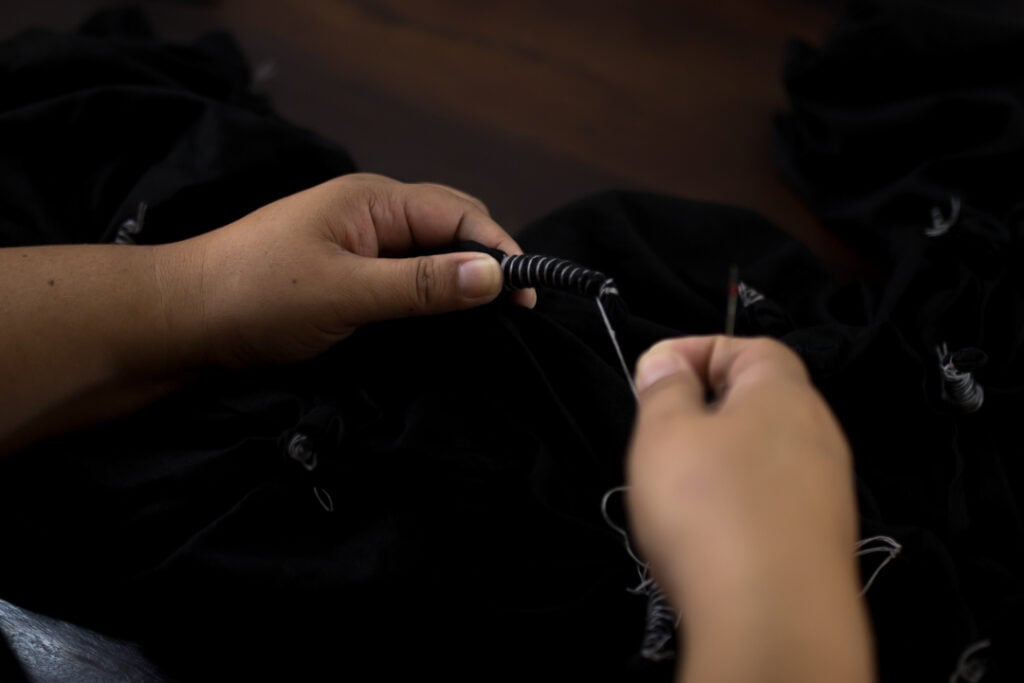
There is also something clarifying about having to explain a process to someone who doesn’t yet know it. To teach is to understand more precisely. When a technique exists only in our own hands, it can remain half-articulate, intuited rather than reasoned. The moment we have to pass it on, we are forced to find words for it, to break it into its components, to ask ourselves what we actually know and how we came to know it. In this way, the act of teaching has made us more rigorous makers.
Over the past decade the studio has become a place not only of production but of ongoing inquiry into the work, and into how that work is held. During that time many helping hands have passed through the studio. A small, steadily growing core has stayed – and in staying, become something more than helpers. Fellow artisans, who work alongside us to expand this art form’s world to something larger than us.